Below What Electricity Rate Can Home Mining Still Profit in 2026? Three-Tier Thresholds
The single most common question in home mining is “below what electricity price does it actually make money?” There is no abstract answer — you need to plug in specific hardware, the current coin price, and the network difficulty. This piece anchors on live May 2026 numbers and sweeps three tiers (8, 10, 12 cents per kWh) across the most common ASIC and GPU choices, so you can stop guessing and start reading. Think of it as the line-item complement to is home mining still profitable in 2026 — that piece gave the macro conclusion, this one gives per-device ledgers.
What each tier means in real-world terms
Mapping the numbers to lived environments first:
- 0.08 USD/kWh: Texas industrial baseline, certain Canadian provinces in winter off-peak, Paraguay residential
- 0.10 USD/kWh: most US state averages blended industrial-residential, China tier-one residential (about RMB 0.70/kWh), eastern European homes
- 0.12 USD/kWh: California baseline tier, UK standard residential, Japan and Korea homes, China residential tier-two
These three tiers cover the vast majority of North American and European household power realities. Below we run four common devices through each tier.
The four rigs in the model
The selected rigs represent the home mining choices that matter in 2026:
- Antminer S23 Hydro: 580 TH/s, 5800 W, Bitcoin
- Antminer S21 Pro: 234 TH/s, 3531 W, Bitcoin (still in production)
- Goldshell KA Box II: 12 TH/s (kHeavyHash), 1500 W, Kaspa
- RTX 4070 system: 1620 MH/s, 300 W, Kaspa
May 2026 market anchors: BTC at 68,000 USD, network hashrate 920 EH/s, per-TH/s daily yield 0.0332 USD; KAS at 0.12 USD, network 1.8 EH/s, per-MH/s daily yield 0.000085 USD.
The 8-cent tier: the only consistent-profit zone
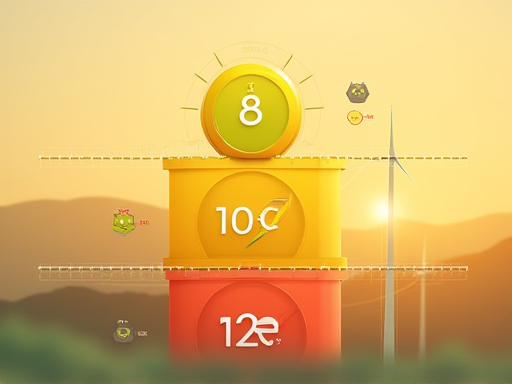
This is the upper bound for home mining to make stable money. The four rigs at this tier:
| Rig | Daily gross | Daily power | Daily net | Yearly net |
|---|---|---|---|---|
| S23 Hydro | 19.27 | 11.14 | +8.13 | 2,967 |
| S21 Pro | 7.77 | 6.78 | +0.99 | 361 |
| KA Box II | 1.02 | 2.88 | -1.86 | -679 |
| RTX 4070 system | 0.138 | 0.576 | -0.44 | -160 |
The picture is stark — even at 8 cents, only the flagship ASIC (S23 Hydro) delivers meaningful profit. Last-gen S21 Pro nets less than a dollar a day, scarcely worth new capex. Kaspa GPU and KA Box II are already in the red.
The 10-cent tier: the line in the sand
This is the tier facing most American homes. Same four devices:
| Rig | Daily gross | Daily power | Daily net | Yearly net |
|---|---|---|---|---|
| S23 Hydro | 19.27 | 13.92 | +5.35 | 1,953 |
| S21 Pro | 7.77 | 8.47 | -0.70 | -256 |
| KA Box II | 1.02 | 3.60 | -2.58 | -942 |
| RTX 4070 system | 0.138 | 0.72 | -0.58 | -212 |
This tier is where the S21 Pro flips to losing. The S23 Hydro still profits, but yearly net falls below 2,000 USD and payback stretches notably. Everything else stays underwater.
The 12-cent tier: almost universal loss
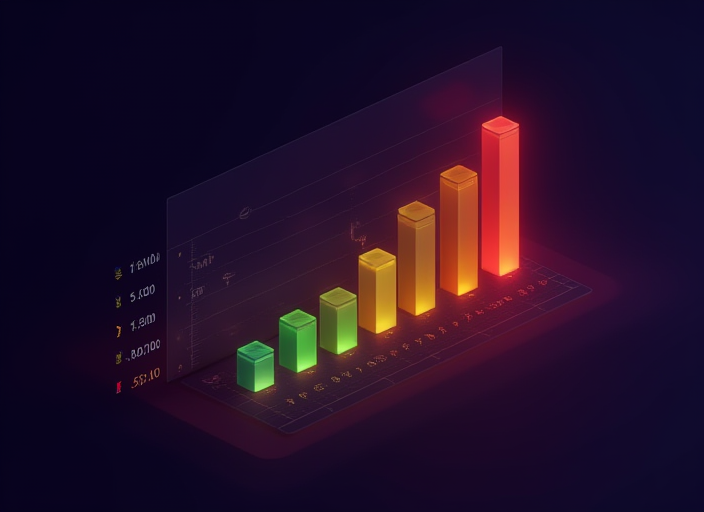
This matches California, the UK, Japan, and Korea residential rates. Table:
| Rig | Daily gross | Daily power | Daily net | Yearly net |
|---|---|---|---|---|
| S23 Hydro | 19.27 | 16.70 | +2.57 | 938 |
| S21 Pro | 7.77 | 10.17 | -2.40 | -876 |
| KA Box II | 1.02 | 4.32 | -3.30 | -1,205 |
| RTX 4070 system | 0.138 | 0.864 | -0.73 | -266 |
Only the S23 Hydro stays positive, but yearly net under 1,000 USD means the 11,800 USD rig takes more than 12 years to pay back. Factor difficulty growth and the next halving in and the rig effectively never recovers cost at this tier. Everything else loses 200 to 1,200 USD a year.
Three durable takeaways
Combining the three tables yields three solid conclusions:
- 8 cents per kWh is the hard ceiling for home mining. Above it, retail household miners are nearly destined to lose money regardless of hardware.
- Hardware choice cannot rescue you from a bad power tier. Even the most advanced 2026 ASIC fails to recover cost at 12 cents. The “buy a better miner” delusion never survives the math, which matches the conclusion in the ASIC vs GPU mining comparison.
- Kaspa GPU mining loses across all three tiers. There is no household profit scenario for it in May 2026 — either pivot to cheaper GPU alternatives or exit altogether.
If your tier sits between 10 and 12 cents
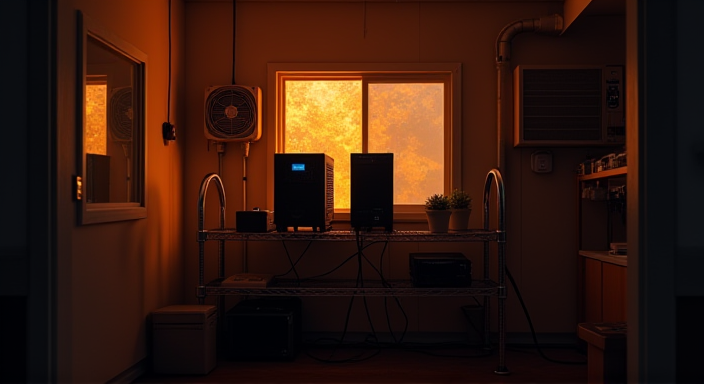
This is the most awkward range, covering most North American homes. A few survivable plays:
- Time-of-use exploitation: many utilities offer 0.04 to 0.06 USD rates overnight (22:00-7:00); running only in that window can pull your blended rate near 0.07 USD
- Solar supplementation: rooftop solar overflow during midday becomes effectively free hashrate
- Seasonal heat reuse: in winter, mining heat replaces electric heating or domestic hot water, splitting the bill across two budgets
- Exit mining entirely: redirect the hardware to DePIN GPU rental or simply stake ETH, skipping the electricity trap
Hidden variables beyond the rate
The pure electricity tier still misses several variables that can shift the ledger:
- Coin price volatility: BTC down to 50,000 pushes even the 10-cent S23 Hydro into losses
- Difficulty creep: network hashrate grows about 3.5% per month in 2026, meaning your share shrinks 3.4% each month
- Cooling overhead: summer AC for a home mining room can add 20-30% to power costs
- Networking: a stable 100 Mbps upload usually costs 50-100 USD per month, which must be allocated
- Hardware depreciation: flagship rigs lose half their resale value in 2-3 years
We covered these in detail in how to calculate Bitcoin mining electricity cost. Stack them on top of the three tiers and the practical breakeven rate is another 1 to 2 cents tighter than the headline numbers suggest.
A note for anyone running the math
If you are weighing a home mining decision, the simplest checklist is:
- Pull your meter’s actual 12-month average (not contract rate)
- Map it to one of the three tier tables above
- Add a 20% buffer for hidden costs
- Proceed only if the result remains positive with payback under 4 years
- Otherwise route the same capital to dollar-cost averaging or a spot ETF, which usually wins long term
That is the entry ticket for home mining in 2026. The electricity threshold is the wall you cannot wish away, no matter how advanced the hardware. Run the numbers first, then decide whether to press the power button.