Can You Still Make Money With a Home Mining Rig in 2026? A Reality Check
Is home mining still a thing in 2026? Yes, but it has shrunk into a very specific shape. It’s no longer the 2017 or 2021 landscape of “plug it in and make money” — it has become a niche play that only works when several conditions are simultaneously true. This piece doesn’t sell hardware and doesn’t push pools. It simply lays out the actual profit math so you can judge whether you fall inside that narrow window.
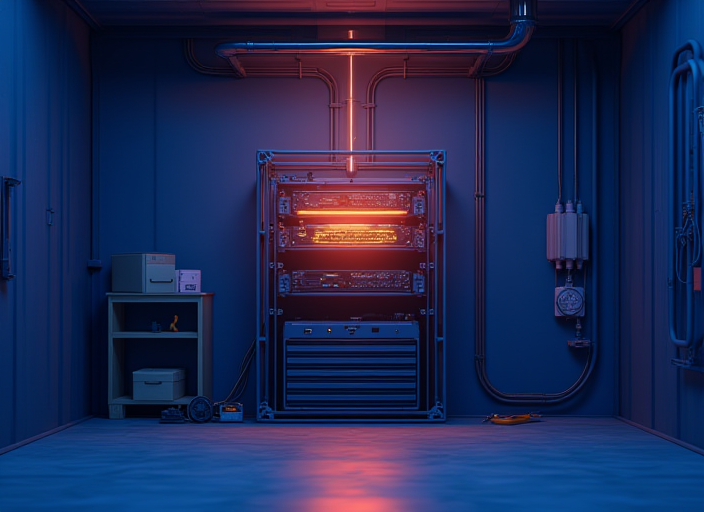
Frame the state of play with one table
| Dimension | 2017 home mining | 2021 home mining | 2026 home mining |
|---|---|---|---|
| Mainstream rig | Older ASICs like S9, GPU farms | S19, RTX 3080/3090 farms | New ASICs like S21 Pro, almost no GPU |
| Single-unit hashrate | Around 14 TH/s | 90 – 110 TH/s | 200+ TH/s |
| Single-unit power | ~1.3 kW | ~3.2 kW | ~3.5 kW but with doubled efficiency |
| Network difficulty | Medium | High | All-time high, still rising |
| Electricity break-even | Profitable up to ~$0.08 / kWh | Roughly stable under ~$0.06 | Roughly viable only under ~$0.05 |
| Home viability | Common | Still wide | Only a small share of households qualify |
Don’t memorize the literal numbers — memorize the structure: the electricity break-even has fallen by more than 40% over a decade, and network difficulty has multiplied several orders in the same window. Where those two curves cross is the narrow zone “very cheap power + latest-generation hardware” — both must be true at once. If you need to rebuild the basics first, start with mining guide.
The variables that actually decide profitability
Home mining profit reduces to one line: daily coin output value minus daily electricity cost minus pool fees minus depreciation. Any of the four can flip an account red:
- Electricity: residential rates run roughly $0.05 – $0.20 / kWh. A 3.5 kW ASIC running 24/7 uses about 84 kWh per day — in a $0.10 / kWh zone, that’s $8.4 per day. In a soft BTC window this alone is a per-unit loss.
- Hardware generation: the ASIC vs GPU mining comparison is basically settled — major coins are owned by ASICs, GPUs survive in a handful of small alts. The key buy metric is J/TH, the canonical “obsolete or not” figure.
- Pool fees: solo mining is infeasible at home scale — you must join a pool. Mainstream pools charge 0.5% – 4%. PPS, PPLNS, FPPS mechanics are in choosing a Bitcoin mining pool; for home hashrate, PPS-family is usually the right choice.
- Price and halving cycle: each Bitcoin halving cuts block reward in half, home revenue takes an instant -50% structural hit. After 2024 a wave of marginal home miners got flushed. Before the next 2028 halving, BTC price has to rise or efficiency has to improve to cover that drop.
Run all four through Excel and you’ll know whether your rig at your rate makes or loses a few dollars per day. If you can’t compute it, don’t buy.
Real home constraints: noise, heat, electrical load
Most analyses only look at the profit model, but home itself adds a physical constraint stack that decides whether you can keep running at all:
- Noise: an S21 Pro at full load runs around 75 dB — equivalent to a vacuum cleaner that never stops. Most residences can’t tolerate this unless you have a garage, basement, or dedicated room.
- Heat: 3.5 kW of dissipated heat lifts a small enclosed space past 40°C in summer. You’ll need at least industrial-grade fans plus ducting, or the rig throttles into protection mode.
- Electrical load: a single 220V/16A circuit in many homes maxes around 3.5 kW — one new ASIC already saturates it, and adding a second one needs a dedicated line. North American 110V housing is even tighter.
- Non-linear utility bills: many jurisdictions use tiered residential rates where excess consumption jumps to a higher bracket. Your spreadsheet says $0.10 / kWh; the actual bill comes back at $0.18. This is the single most common “lost money I didn’t expect” failure mode.
Who in 2026 still fits the home-mining profile?
Collapsing the variables above, the profile that still nets positive at home is narrow:
- Long-term residential power below $0.05 / kWh — hydro-direct, solar surplus, or a special utility contract on a small fraction of households.
- A dedicated physical space — garage, soundproof workshop, or similar — that can absorb the noise and heat.
- A long enough holding window — at least 1.5 – 2 years to ride the next cycle. Under a “pay back in 3 months” frame, home mining basically can’t clear in 2026.
- Mental model of “trading electricity for coins” — treat mining as low-price DCA into BTC paid in kWh, not as cash arbitrage. This is the only psychological frame that works at home in 2026.
- Comfort with basic operations — firmware updates, thermal tuning, switching pools. Outsourcing to a stranger usually ends badly.
Conversely, any one of these flags means don’t enter:
- Living in an apartment, shared housing, or a multi-use commercial-residential building.
- Wanting “payback in two or three months”.
- Never having read the mining guide or studied your electricity cost structure.
- Funding the rig with debt or leverage.
- Inability to absorb a 30%+ principal drawdown across 6 – 12 months.
A few “looks profitable, actually a trap” variants
Beginners keep running into nicely packaged home-mining-adjacent ideas:
- “Cloud hashrate subscriptions” — they manage rigs and split output. The truly profitable hashrate almost never gets sold — what reaches retail is usually what farms didn’t want to keep, and long-term net returns trend negative.
- “Small-altcoin home mining” — GPU-mining a freshly launched coin where the theory shows even home power can win. Difficulty adjusts fast on those chains, and by setup time the edge is gone.
- “Phone mining” — the 2024 – 2025 wave of phone/router “mining” apps is mostly a point system with no real hash contribution.
These aren’t all scams, but they aren’t actual home mining either — don’t count them in your expectation.
A 2026 home-mining decision checklist
Seven questions, each answerable in one sentence:
- What’s my real delivered electricity rate, including tiered penalties?
- Where do I house the rig — physical space and dedicated circuit?
- Does the model I plan to buy still rank in the top tier on J/TH in 2026?
- Does my pool’s fee model suit my hashrate band?
- What’s my BTC median price assumption across this cycle?
- How long am I willing to hold before shutting down?
- If price slides 40% over 12 months, does my cash flow survive?
If any answer is “haven’t thought about it”, you aren’t ready to enter. This article is not investment advice; mining sits under different legal and tax regimes — verify local compliance first.
Closing: home mining as a lifestyle choice, not an alpha source
The real shape of home mining in 2026 is closer to a hybrid of “swap kWh for BTC” plus “long-term DCA”. It no longer offers 2017 or 2021 excess returns, but for the narrow band who fit, it stays a stable accumulation method with a different risk profile than spot. It belongs to people willing to absorb it as a lifestyle, not those chasing fast returns. If return elasticity matters most, spot DCA or majors staking is cleaner — and complementary to home mining, not competing with it.