
Aave 200M rsETH Bad Debt Event: Where the Impact Is and How It Gets Handled
Following the KelpDAO exploit, Aave V3 mainnet accumulated 177 to 200 million USD of bad debt, almost entirely concentrated in one market. This article breaks down how the debt formed, why liquidations failed, whether the Safety Module gets slashed, the real impact on borrowers and depositors, and the AIP-512 governance resolution.

KelpDAO 292M Cross-Chain Bridge Exploit: A Full Postmortem
On April 18, 2026, an attacker minted 116,500 rsETH out of thin air on Arbitrum, draining roughly 292 million dollars through a misconfigured LayerZero OFT contract. This article walks through the timeline, the root cause, the fund flow, the protocol response, and the spillover into the broader LRT sector.

Vitalik Proposes Options to Replace DeFi Liquidations - Will It Change DeFi?
On 2026-06-02 Vitalik published a proposal to replace forced liquidations in DeFi lending with put-option settlement, reducing systemic risk and liquidation cascades. This piece unpacks how the mechanism works, what it means for borrowers and borrowing rates, and the real engineering hurdles to actually shipping it.

How Does the Aave V4 Hub-and-Spoke Architecture Work?
Aave V4 went live on 2026-03-30 with a hub-and-spoke liquidity design, separating a unified liquidity hub from market-specific spoke lending pools. This article unpacks what V4 changed, what it means for depositors and borrowers, and how it compares to V3, Morpho and Spark.

6 DeFi Protocols Worth Watching in 2026: Aave, Hyperliquid, Polymarket, EigenLayer, CoW, Lido
In 2026 DeFi has entered an "infrastructure phase" — lending, perpetuals, prediction markets, restaking, MEV protection, and liquid staking concentrate around six core protocols. This piece puts Aave, Hyperliquid, Polymarket, EigenLayer, CoW, and Lido on one map and explains what each does, why it matters, and what risks deserve attention.

Is Earning Yield on Stablecoins in DeFi Actually Safe?
"Earn yield on stablecoins in DeFi" is one of the biggest beginner onramps in 2026, and the headline APY looks mild — but "safe" hides at least four layers of structural risk. This piece unpacks contract, collateral, liquidation, and stablecoin-itself risk, then gives a usable risk-budget allocation so you can decide what bucket of risk this product really belongs to.

What Actually Changed in DeFi Yield Strategies for 2026? From Chasing APY to Structured Risk-Adjusted Income
In 2026 the dominant DeFi yield-strategy thesis has shifted from "go wherever APY is highest" to "look at returns net of risk". This piece walks through the APY traps users repeatedly fell into, how today's structured-yield products decompose, and how to allocate capital across the three risk tiers.

How Berachain's Proof of Liquidity (PoL) Actually Works: The Three-Token Model Explained
Berachain replaces traditional PoS with Proof of Liquidity (PoL), handing reward-allocation power from validators to DeFi liquidity providers. Here is the clearest breakdown of how BERA, BGT, and HONEY work together.

Where Does Ethena USDe Yield Actually Come From? Synthetic Dollars, Taken Apart
Ethena USDe keeps printing double-digit yields, not by magic but by bundling staking rewards with perpetual funding rates and handing them to holders. Here is a layer-by-layer breakdown — and the risks.
What Is BlackRock BUIDL? Why Traditional Asset Managers Put a Money-Market Fund On Chain
BlackRock BUIDL is a tokenized money-market fund issued on Ethereum that pays Treasury interest into on-chain wallets. Here's how it works, who can buy it, and how it differs from ordinary RWA stablecoins.
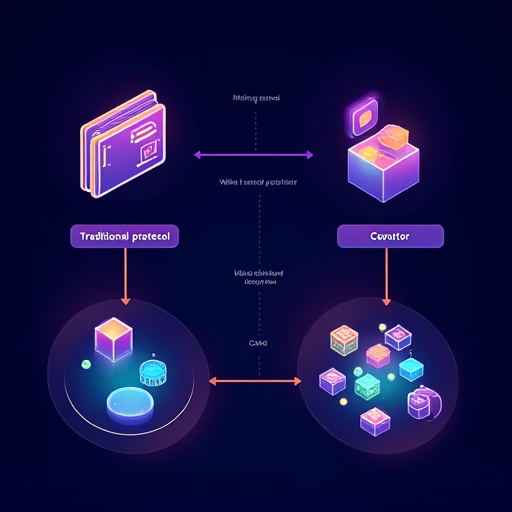
DeFi Vaults vs Direct Protocol Lending: Which Path Actually Fits You? A Side-by-Side Comparison
Depositing USDC onchain for yield can mean two completely different actions in 2026 — putting it into a Morpho curated vault, or becoming a depositor in an Aave shared pool. The risk structure, yield source, and decision granularity behind each are entirely different. This piece puts the two paths side by side so you can pick which fits.

What Are Morpho Curated Vaults, and Why Did TVL Climb to $5.8B in a Year?
In 2026 Morpho's curated vaults split classic DeFi lending into two clean layers — a minimal primitive plus an outsourced risk curator. TVL went from under $2B to $5.8B in a year. This piece peels the structure apart, explains the Risk Curator role, and contrasts it against Aave's shared-pool model.

What Is Aave? The Pioneer of Decentralized Lending, From Pools to Flash Loans
During the 2020 DeFi Summer, Aave's TVL briefly broke $20 billion, turning decentralized lending into a daily-use product. This article explains the lending pool, collateral and liquidation, flash loans, the AAVE token and GHO, plus the real risks from oracles and rate spikes.

What Is Uniswap? The Flagship DEX, From AMM to V4 Explained
Uniswap lets trades happen without traders or order books — it runs on an AMM. This article walks through the x·y=k math, the V2 to V4 evolution, the UNI governance token, and the real risks of impermanent loss and MEV.

What Is RWA? The Logic, Sectors and Risks of Tokenizing Real World Assets
RWA brings treasuries, bonds and real estate on-chain. Here's what RWA is, why it's a 2026 hot sector, its main categories, how it works, and its core risks.

What Is DeFi? What Decentralized Finance Can Do, and Where the Risks Lie
Rebuilding swapping, lending, and yield with smart contracts—a clear look at what DeFi can do, how it works, and the real risks you must understand.