DeFi Vaults vs Direct Protocol Lending: Which Path Actually Fits You? A Side-by-Side Comparison
Many users in 2026 keep hitting the same fork in the road — they want their onchain USDC to earn a stable yield, but should they deposit into a curated vault, or stay with depositing directly into a legacy pool like Aave or Compound? On the surface both look like “deposit stablecoin, collect interest”, but operationally they are two completely different investment actions. This piece lines them up side by side so you can identify which one you actually are.
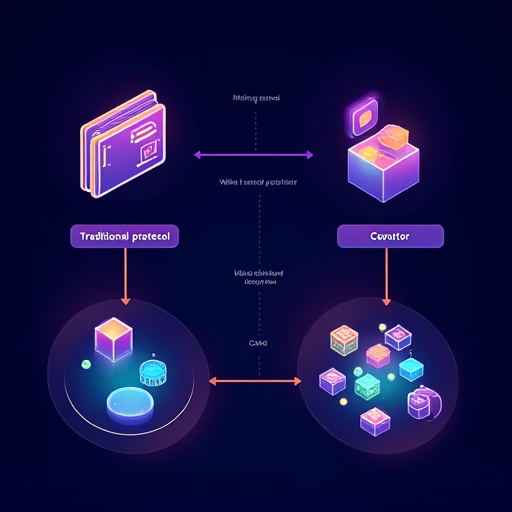
What the two paths are structurally doing
Start by separating the underlying mechanics.
Going direct into a protocol means you become one of the depositors in that protocol’s shared main pool (Aave for example). All collateral types, all borrowers, all liquidation parameters land on you as a packaged whole — your deposit rate is a weighted average across all borrow rates, and your risk exposure is the sum of every collateral type allowed by the pool. The full mechanics are in what is Aave lending.
Going into a curated vault means you’ve outsourced the decision to a named curator. That curator picks specific markets on Morpho Blue underneath and dispatches your funds across them — each market is a (collateral, borrow asset, LLTV, oracle) isolated tuple. Your risk exposure is precisely confined to whatever market list this vault chose; full mechanics live in Morpho curated vaults.
A one-line distinction: going direct = trusting governance; going vault = trusting the curator. The former is a collective community decision, the latter is a professional outsourcing.
A side-by-side table across eight dimensions
Put both paths into the same comparison grid:
| Dimension | Direct (Aave / Compound) | Curated vault (MetaMorpho) |
|---|---|---|
| Risk parameter setter | Governance token holder vote | Named risk curator |
| Collateral composition | Shared across protocol | Selected per vault |
| Loss blast radius | Pool-wide pro-rata | Limited to single vault |
| Yield source | Single pool borrow rate | Blended across Blue markets |
| Decision granularity | Pick the protocol, done | Pick vault plus evaluate curator |
| Withdrawal liquidity | Usually instant | Depends on underlying markets |
| Fee structure | Protocol reserve factor | Curator takes 5%-15% performance fee |
| Learning cost | Read one parameter table | Read vault dashboard plus allocation history |
Row three — the difference in risk isolation — is the dimension casual users underestimate but actually matters most. In Aave’s shared-pool model, if a newly listed collateral gets oracle-manipulated into bad debt, every depositor shares the loss pro-rata. In a vault model, if one market inside a vault fails, only depositors of that specific vault are affected.
Who should go direct into a protocol
Going direct is the better fit for these profiles:
- People who don’t want to make a “pick a vault” decision — you want a legacy protocol that has run for years without incidents, deposit and forget
- Small position sizes — at the low-thousands-of-dollars level, the marginal yield from studying a vault dashboard doesn’t justify the learning time
- Extreme risk aversion — you only accept parameters that have been market-tested for four or five years
- Instant withdrawal needs — shared main pools usually settle withdrawals in one block
- Reluctance to pay another performance fee — direct deposits skip the curator cut
The core trade-off here is granularity — your yield is the averaged version and your risk exposure is undifferentiated, with no way to specifically request “I only want blue-chip collateral markets” or “I only want RWA-collateral markets”. For most regular users that simplification is actually an advantage.
Who should go into a curated vault
Curated vaults are the better fit for:
- Intermediate users who want fine-grained risk exposure control — wanting “only ETH-class collateral” or “only stablecoin collateral” custom slices
- Institutional and quasi-institutional capital — needing to document every risk on a report, needing explainability
- Structured higher yield seekers — vaults mixing RWA and blue-chip collateral typically run 2-4 percentage points above the Aave main pool, on explainable terms
- Users with trust in specific curators — for example long-time followers of Gauntlet, Steakhouse, or similar risk-research teams
- Users who accept that withdrawals may not be instant — large redemptions can take hours to days
The core cost is cognitive load — you can no longer “see the brand name and deposit blind”, you have to walk through due diligence: who’s the curator, what’s the current allocation, what’s the largest single-market exposure, what’s the performance fee. That checklist looks essentially identical to picking a hedge fund.

A common misconception: vaults aren’t automatically higher yield
A lot of users first hearing about vaults assume the core selling point is higher yield — that’s a misread. The actual core selling points of a curated vault are three:
- Risk isolation — losses contained to one vault
- Risk explainability — you can name exactly where the capital sits
- Professional curation — parameters set by a specialist team, not by governance bargaining
Yield magnitude is downstream of these three properties. A conservative vault may very well print lower APY than the Aave main pool because it picked a tighter market set. Comparing vaults and Aave with APY as the single metric is misaligned. If DeFi fundamentals are still fuzzy, build them up via DeFi guide or starting with DeFi tutorial.
A portfolio view: it doesn’t have to be either-or
In practice many intermediate users in 2026 run a two-path blend — the base position (the bulk) sits in a legacy shared main pool like Aave for simplicity and instant liquidity, and a smaller slice (10%-20%) sits in one or two curated vaults to capture structured extra yield. That blend keeps the stability of legacy protocols while letting the vault slice generate additional alpha.
This thinking is consistent with the broader DeFi yield strategy layering logic, with full allocation framework in DeFi yield strategies 2026 structured.
Concrete decision questions
If you’re still on the fence, ask yourself:
- How much time can I spend on DeFi per week? Under one hour — go direct; more — you can learn vaults
- Can I explain where my current yield comes from? If no — get the structure clear first
- Can I tolerate a withdrawal delay? If no — go direct
- Do I trust governance token holders’ decisions more, or a reputable specialist team more?
- Is my position size large enough to justify the extra learning cost of a vault?
No universal answer exists — it depends on the person, the size, and the goal. Walking through this checklist at minimum prevents two typical misallocations: “Morpho’s pumping so I’ll blind-deposit” and “Aave is legacy so I’ll blind-trust”.
A trend worth tracking long-term
The DeFi lane shifting from “one-size-fits-all protocol risk” to “curator-tiered risk” is structural, and neither side is absolutely right — shared main pools and curated vaults both absorbed huge inflows in 2026 and will coexist long-term. The split simply depends on which user type you are and what your decision-granularity need looks like. This article isn’t investment advice — whichever path you pick, independent due diligence and contract-risk evaluation are never skippable. To see what the core protocols on each DeFi mainline are actually doing today, continue with 6 DeFi protocols worth watching in 2026.