After Years of Hype, Where Has StarkNet Actually Landed by 2026?
From 2021 to 2026 StarkNet has been the poster child of "zk L2 long-termism", and people kept asking whether it actually runs. This article maps StarkNet's real status today across Cairo evolution, proof recursion, app-chains, TVL and account abstraction, and asks how much of its differentiation versus other zk L2s really remains.
What Is Actually New in ZK Rollups in 2026? A Plain Progress Map
ZK Rollups jumped from "experimental" to "usable" across 2024–2025, and 2026 is the third phase — major zkEVMs approaching Type 1, prover times collapsing to seconds, recursive proofs becoming standard. This article maps the real progress in May 2026 without piling on jargon.
Are "Yield-Bearing L2s" Like Mantle and Blast Actually Safe?
Mantle and Blast are the two most distinctive L2s of the past two years because they bake native ETH yield and stablecoin interest into the L2 account model itself. The "bridge in and earn automatically" pitch sounds wonderful but it also moves a stack of DeFi risk down into the L1 trust layer. This article compares the two yield mechanisms and clarifies the real risk points.
How Is Coinbase's Base L2 Actually Performing in 2026? A Deep Review
By 2026 Base has grown from a Coinbase side project into one of the de facto leaders in the L2 race, with TVL, active addresses, fee structures and applications looking nothing like two years ago. This article unpacks Base across data, ecosystem, revenue and risk so you can place it on the map with more nuance than just "fast" and "cheap".

Why Did Uniswap Build Its Own L2 Called UniChain?
When Uniswap announced UniChain in late 2024, the entire crypto industry blinked. Why does the number one DEX need its own chain? This article unpacks UniChain — the economic logic of a DEX building its own L2, the specific technical choices, how UNI token finally got a cash flow story, and the ripple effects on other L2s and DEXs.
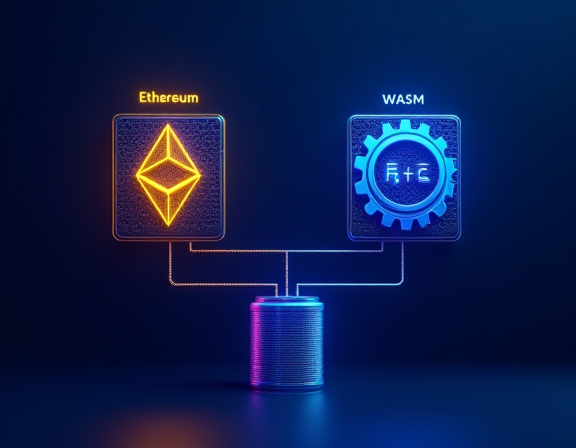
Once Arbitrum Stylus Let Rust Actually Run on an L2, What Really Changed?
After Stylus went live on Arbitrum mainnet in 2025, Rust and C++ smart contracts finally execute inside the Ethereum economic perimeter. This article unpacks how Stylus coexists with the EVM, why its gas model is completely different, what it means for developers and users, and whether it really threatens Solidity's dominance.
When Should I Use a Layer 2 Instead of Mainnet? A Decision Framework
The same transaction is sometimes safer on mainnet and sometimes far cheaper on a Layer 2. This article gives a four-dimension decision checklist — by amount, use case, counterparty, and dwell time — that ordinary users can apply directly to decide when to take the rollup path and when to stay on mainnet.

What Is OP Stack? The Superchain's Shared L2 Infrastructure
Optimism isn't a single chain — it's a toolkit for building L2s. OP Stack is its open-source framework, and Base, World Chain, Mode are all built on top. What does Superchain aim for, and how does it differ from ZK Stack?
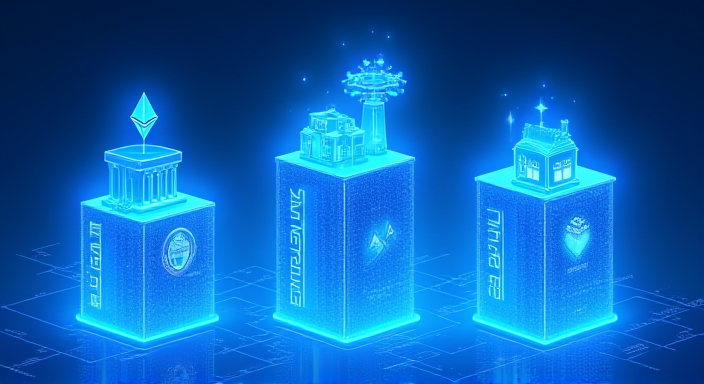
Arbitrum vs Optimism vs Base: How to Pick Among the L2 Big Three
Arbitrum TVL $13.8B, Base $11.2B, Optimism $9.3B — the three together hold 77% of all L2 DeFi value. They're all Optimistic Rollups, but their ecosystems, fees and positioning diverge sharply.

What Are ZK-Rollups and Zero-Knowledge Proofs? Ethereum Scaling's New Mainline
ZK-Rollups use zero-knowledge proofs to compress and verify huge batches of transactions — the new mainline of Ethereum scaling. Here's how they work and how they compare with Optimistic Rollups.

What Is Layer 2? An Introduction to Ethereum Scaling Networks
The main chain is slow and expensive—how does Layer 2 boost speed and cut fees without sacrificing security? A clear look at how rollups work, their categories, the major ecosystems, and what to watch out for.