What Is OP Stack? The Superchain's Shared L2 Infrastructure
Before explaining OP Stack, correct one common confusion: Optimism is not a chain — it is a toolkit for building L2s. What we call “OP Mainnet” is just the reference chain built with that toolkit. What really lifted Optimism’s profile after 2024 is that more and more projects use the same toolkit to ship their own L2s and string them together into a network called the Superchain.
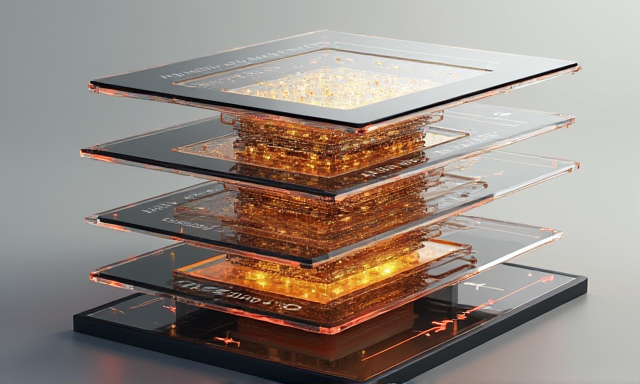
What OP Stack is: a modular L2 blueprint
The essence of OP Stack is to break a rollup into independently replaceable layers with clean interfaces between them:
- Data availability (DA): where the rollup posts transaction data. The default is Ethereum L1 (via EIP-4844 blobs); alternatives like Celestia and EigenDA are also pluggable.
- Sequencing: orders transactions. Default is a single sequencer, with decentralization on the roadmap.
- Execution: EVM-equivalent clients like op-geth and op-reth that run contract state.
- Settlement: fraud proofs and state-root submissions, ultimately landing on Ethereum.
- Governance: the Optimism Collective’s bicameral Token House + Citizen House.
Each layer can be upgraded independently and replaced by third-party implementations — which is exactly where the name “Stack” comes from. Versus a single “Ethereum L2 protocol,” OP Stack is more like a Linux distribution: same kernel, but distributors are free to repackage.
(/uploads/20260529/1780061045463-61606.png)
Projects built on OP Stack
OP Stack already has a serious user list:
- Base (Coinbase): the most successful sample, $11B+ TVL and millions of monthly actives, the gateway through which most retail users enter crypto.
- World Chain (Worldcoin): embeds World ID into the protocol, an identity-first app network.
- Mode: DeFi and AI focused, with contract-level fee sharing.
- Zora: NFT minting and creator economy as default infrastructure.
- Soneium (Sony): a Japanese-conglomerate L2 themed around entertainment and IP.
- Mantle, Lisk, Redstone are also OP Stack derivatives.
The most important commonality across these chains is not a technical detail but they all use the same security model and cross-chain message format, which is what makes Superchain possible.
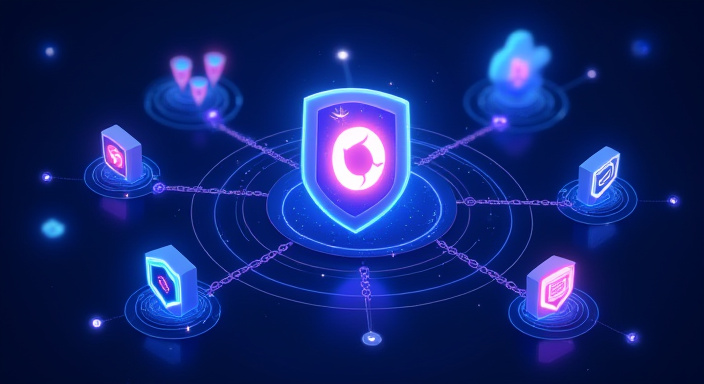
Superchain: a network of L2s sharing security
Just an open-source framework would only get you so far. What actually changed the landscape is the Optimism Collective’s Superchain vision — letting OP Stack chains stop being silos and instead share:
- Security upgrades: core contracts under the Optimism Security Council’s unified multisig, so each chain doesn’t reinvent risk controls.
- Bridges and messages: the Superchain Interop protocol lets events on one chain be read on another in seconds, far faster than ordinary bridges.
- Sequencing and censorship resistance: a future shared decentralized sequencer extends the same liveness and censorship guarantees to every Superchain child chain.
- Governance and public goods funding: the Token House and Citizen House distribute OP through RetroPGF, funding infrastructure that benefits the whole Superchain.
Put plainly: Superchain doesn’t want to be “another faster L2” — it wants N L2s to feel like one big chain. When the NFT you buy on Base instantly bridges to Zora to display, and your DeFi action on Mode is verified on World Chain a second later, that’s what Superchain looks like in practice.
How interoperability actually plays out
After Superchain Interop’s gradual rollout in 2025, developers got new primitives:
- Cross-chain messages (SuperchainMessenger): one transaction can trigger callbacks on multiple Superchain chains without re-signing.
- Unified USDC: with Circle’s CCTP, USDC across Superchain chains is the same asset, bridged with zero slippage and zero fee.
- Shared wallet sessions: an account abstraction wallet works across every Superchain chain, chain switching is transparent.
For developers, this means things that used to require bridges and LayerZero middleware are slowly internalized into the protocol. For users, “which chain am I on” becomes increasingly irrelevant — exactly the feel a modular era should deliver.
OP Stack vs ZK Stack: two flavours of modularity
OP Stack isn’t the only L2 toolkit. On the other side is the ZK Rollup camp’s ZK Stack (zkSync’s open-source Elastic Chain framework) and the similar Polygon CDK. The temperaments differ sharply:
- Proof type: OP Stack uses fraud proofs (Optimistic); ZK Stack uses validity proofs.
- Finality: OP Stack defaults to a ~7-day challenge window; ZK Stack only needs proof generation, minutes to hours.
- EVM compatibility: OP Stack is EVM-equivalent; ZK Stack is mostly EVM-compatible (some semantics differ).
- Interop model: OP Stack uses Superchain shared bridges and messages; ZK Stack uses Hyperbridge / Elastic Chain proof aggregation.
- Shared security: OP Stack via multisig + unified governance; ZK Stack via shared ZK proof aggregation.
- Notable users: OP Stack — Base, World Chain, Soneium; ZK Stack — Cronos zkEVM, GRVT, Sophon.
In short: OP Stack is more engineering-pragmatic — ship the L2 today with fraud proofs as a fallback; ZK Stack is more cryptography-pure — higher launch threshold, but faster finality and bigger long-term aggregation upside.
These paths are not mutually exclusive — large apps will likely run instances on both. A few projects (Polygon, Linea) even mix the two into a “Optimistic now, ZK later” gradual path.
Who wins, who feels the pressure
OP Stack’s expansion has a few quieter consequences for the L2 landscape:
- Big brands turn into L2 operators. Coinbase, Sony, Worldcoin don’t need to build chains anymore — they rent OP Stack and ship. The tech bar is flattened.
- L2 = application layer. When launching a chain is as simple as opening a Shopify store, “the chain itself” stops being special; value shifts upward to apps and ecosystems.
- Optimism Collective’s role evolves. From operating one chain to maintaining the Stack and coordinating Superchain security — closer to the Ethereum Foundation than a single protocol team.
- New staking and restaking business. A future decentralized sequencer needs OP staked, possibly intersecting with EigenLayer’s Restaking services.
Under pressure are projects that want to ship a single L2 without joining any standard framework: without a place in either OP Stack or ZK Stack’s network, liquidity and users are hard to attract.
(/uploads/20260529/1780061079962-85560.png)
In the modular era, L2s share a frame
Looking back across 2024–2026, the L2 evolution is very clear: from “write your own rollup” to “spin up an L2 on someone else’s Stack” to “many L2s sharing one Superchain’s security and interop.” OP Stack is the most advanced answer along that path; it abstracts the wheels everyone used to reinvent — DA, sequencing, fraud proofs, bridges, governance — into swappable modules, letting brands and developers focus on the application itself.
For how the L2 majors compete inside this framework, see Arbitrum vs Optimism vs Base. For how mainnet supports L2 scaling on its side, the Pectra upgrade is unavoidable. The keyword of the modular era is no longer “fast” — it is “shared”: shared frameworks, shared security, shared ecosystem.