What 31 Percent TradFi Volume Share on Hyperliquid Actually Means
In May 2026, Hyperliquid daily volume settled at 5 billion USD plus, with TradFi-style derivatives (equity indices, FX, commodity perpetuals) reaching 31 percent of the mix and surpassing altcoin volume for the first time. This piece dissects the product structure behind that number, the changing user composition, the potential substitution against centralized futures exchanges, and what it signals about the future of on-chain trading.
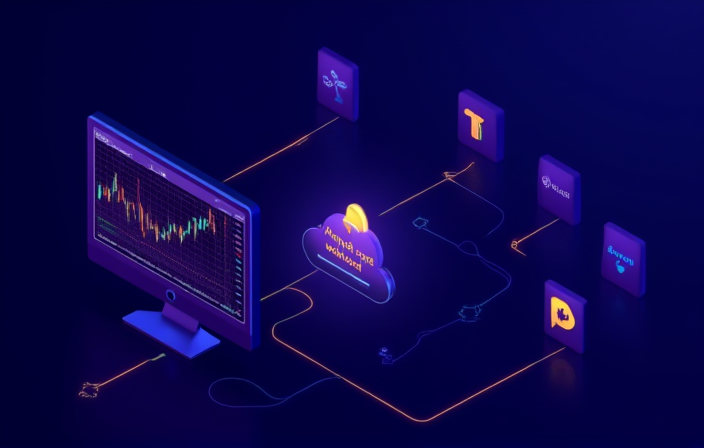
TradingView Alerts and Crypto Trading in 2026: From Conditions to Automated Execution
In 2026 TradingView alerts are no longer just a "ping when price hits" tool. They are the bridge that translates visual analysis into automated execution. This article walks the full path from alert trigger logic, to JSON payload design, to webhook bridging into exchange APIs, plus the multi-alert combinations that form conditional order chains.

Limit Order vs TWAP for Large Crypto Buys in 2026: The Real Cost of Each Execution Path
For small clips the execution method barely matters. But once an order approaches 1% of order book depth, the gap between a single limit order and a TWAP algorithm can widen by hundreds of basis points. Using 2026 order book data, this article breaks down limit, market, TWAP and VWAP execution and quantifies the hidden cost of each.

DCA or Grid in 2026 — Which One Holds Up Better Through Bears and Choppy Markets
DCA and grid are the two most common "semi-automatic" crypto strategies, yet their target environments are completely different. Using 2025-2026 real market data, this article stress-tests both strategies in bear, sideways and bull regimes, dissecting their PnL sources, max drawdowns and failure modes, then shows how to combine them in 2026.

Should Crypto Traders Keep a Journal? A 2026 Template That Can Cut Your Drawdown by 20%
Most crypto traders skip the journal, and most of those who keep one only record ledger entries. Drawing on cognitive science and live trading experience, this article presents a 2026 journal template covering entry reason, emotional state, execution drift and review cadence, explaining why discipline here lifts your win rate after three months.

How to Run Perpetual Funding Rate Arbitrage in 2026 Across CEX and DEX
Funding rate on perpetuals is not just noise. Strip out the directional risk and what is left is a pure cash flow you can harvest. This article walks through a four-step 2026 playbook for arbitraging funding rates between CEX and DEX, covering instrument selection, paired entry, sign-flip monitoring, and net yield math, plus the execution traps beginners always miss.

How Do You Actually Avoid Getting Liquidated on Crypto Futures as a Beginner?
Liquidation isn't bad luck — it's the result of mismatched position size, leverage, and stop placement decided at the moment you opened. This piece walks through an anti-liquidation checklist beginners can use directly, including how leverage really relates to margin, where to actually put a stop so wicks don't sweep it, why funding rate can drain a position over time, and when you should simply not open the trade.

What Is Hyperliquid? A Beginner's Guide to the Perp DEX Dark Horse
Hyperliquid is the breakout decentralized perpetual contract protocol of 2026 — built on its own L1, with matching speed close to a centralized exchange, no KYC required, and a HYPE token that landed in the top 30 by market cap. This article explains the architecture, how it differs from prior perp DEXs, the HYPE token logic, and what it really means for everyday traders.

Spot vs Futures Trading: A Beginner-Friendly Side-by-Side
You want to buy crypto—should you open a spot account or a futures account? This piece walks through the mechanics, risks, and the kind of trader each one actually fits.

Funding Rate Explained: A Beginner's Guide to Perp Futures
Your position hasn't moved, but your account is quietly gaining or losing money — that's the funding rate. This piece breaks down the mechanic, the math, who pays whom, the extreme-regime signals, and how arbitrageurs harvest it.

Limit vs Market Orders: A Crypto Trading Order-Type Guide
Market orders pay for speed, limit orders pay for price. This guide walks through the two basic order types, the slippage trade-off, several advanced orders, and which button a beginner should actually press.

What Are Futures, Leverage, and Perpetuals? Risks Every Beginner Must Know
A clear explanation of futures, leverage, perpetuals, and liquidation mechanics—and why high leverage is the fastest way for retail traders to go to zero.