DTCC Picks Stellar for Its Tokenization Platform, XLM Jumps 40 Percent in a Day

At 10:30 ET on June 3, 2026, DTCC and the Stellar Development Foundation launched Project Aurum in New York — an institutional-grade tokenized securities settlement layer on Stellar. XLM rocketed 0.18 → 0.252, a 40% single-day gain — largest since May 2021.
What This Really Is: DTCC’s First Substantive Public-Chain Move
Don’t file this as “another institution embraces blockchain.” DTCC’s specific role makes it far weightier than a typical RWA announcement.
What is DTCC? Central clearing institution of US securities markets, settling $3.5T+ daily. Almost every US equity, bond, and fund transaction passes through it. DTCC is not a financial institution — it is US financial infrastructure itself. Closed, proprietary, public-chain-isolated for 30 years.
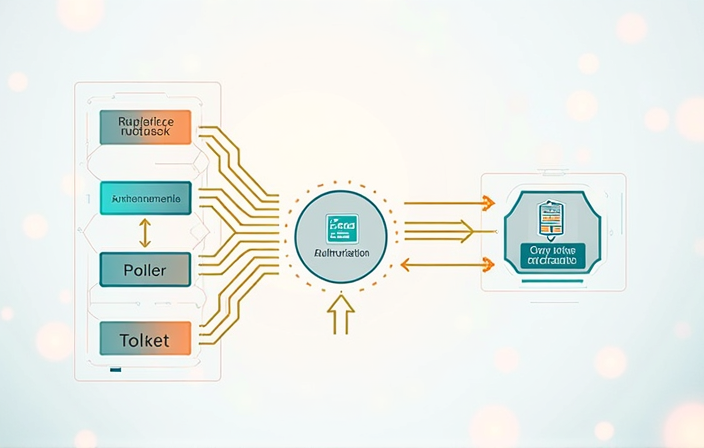
Per the whitepaper, Project Aurum:
- Scope: phase one covers tokenized US Treasuries, tokenized money market fund shares, and tokenized CLO notes
- Settlement layer: uses the Stellar public chain as ledger, with DTCC operating a validator set jointly with Stellar Foundation nodes
- Asset targets: 80 billion USD of tokenized assets within 12 months, 250 billion within 18 months
- Token standard: Stellar-native SEP-41 asset standard, not Ethereum’s ERC-3643
- Compliance layer: KYC/AML governed by a DTCC-maintained allowlist, with transfers requiring allowlist verification
Note the second point: DTCC operates nodes jointly with Stellar — not a fully permissioned private chain. Fundamental difference from JPMorgan’s Onyx or Citi Token Services (private chains). Aurum is co-built with a public chain — remarkably aggressive within US regulatory context.
Why Stellar, Not Other Chains
DTCC VP Mark Wetjen gave four reasons:
| Dimension | DTCC’s view | Notes |
|---|---|---|
| Settlement finality | 3-5 second finality on Stellar, no reorg risk | Ethereum requires multi-block confirmation |
| Fee stability | XLM gas is near zero, no MEV pressure | Ethereum gas is unpredictable |
| Native compliance support | SEP-8 (transfer authorization) and SEP-10 (identity) are protocol-level standards | Ethereum requires contract-level implementation |
| Node-set governance | Stellar consensus permits a designated trusted node set | PoS chains require stake thresholds |
Protocol-level compliance is decisive. Stellar was designed for “compliant cross-border payments.” SEP-8 lets issuers invoke an authorization server on each transfer — native fit for DTCC’s allowlist control. On Ethereum, ERC-3643 is contract-layer, no protocol-level enforcement. For an institution settling $3.5T daily, “protocol-level hard guarantee” beats “contract-level soft implementation.”
Background: RWA tokenization basics, what is BlackRock BUIDL — BUIDL is a single asset manager’s product; Aurum is migration of settlement infrastructure itself.
Market Reaction After the 40% XLM Pop
24-hour XLM action by hour:
- 10:30 ET: press opens, XLM rises from 0.18
- 10:45 ET: clears 0.21, order books on Coinbase, Binance, Kraken go thin
- 11:30 ET: 0.235, perp funding 0.03% → 0.45%
- 14:00 ET: tags 0.252, daily high
- 18:00 ET: pulls back to 0.234
- Next day 10:30 ET: 0.243-0.248
$3.8B 24-hour volume, 17x 30-day average. CEX buy-side from 0.18 to 0.252 was probably under $400M — rest was derivatives and MM pushing price.
Short-term XLM risks:
- News priced in, rollout 6-12 months — regulatory delays trigger pullbacks
- $80B target requires DTCC clients (major banks) to actually use it, not DTCC pushing unilaterally
- XLM gas demand structurally limited — Aurum transfers do not consume significant XLM
- Stellar Foundation unlocks continue — ~2.7B XLM enters circulation over 12 months
My call: 40% is anticipation pricing, likely chops 0.22-0.30 for 3-6 months. Genuine second leg needs Aurum with $20B+ actual on-chain assets. Chasing here carries more risk than reward.
Structural Impact on the Broader RWA Sector
XLM’s 40% pop is surface-level. The structural significance for RWA matters more. Three substantive impacts:
First, public chains gain “quasi-infrastructure” status. BUIDL, Ondo, Maple were asset managers issuing single products. This is settlement infrastructure itself on a public chain — entirely different layer. If Stellar proves out, Ethereum and Solana become plausible homes for analogous institutions (Euroclear, Clearstream).
Second, tokenization boundary expands. Prior RWA meant single-issuer debt or fund shares. Aurum brings CLO notes in — CLOs involve tranching, multi-tier compliance, risk layering. Structured finance core workflow can run on chain.
Third, “compliance chain vs. public chain” dichotomy softens. Aurum adds compliance atop a public chain. Bullish for all public chains, more so for those with native compliance hooks (Stellar, Avalanche, Polygon).
Related: AI + RWA projects, stablecoin guide.
Specific Guidance for XLM Holders
- Existing holders: scale out 30-50% in 0.26-0.28, leave residual for Aurum progress
- New position: don’t chase above 0.24 — wait for pullback toward 0.20
- Long-term: wait until Stellar Foundation’s first major unlock (Sept 2026)
Note: a 40% single-day pop carries >50% probability of a 20%+ pullback within four weeks. Empirical regularity.
What This Genuinely Weighs
This may be one of 2026’s most important crypto events — not because XLM ran 40%, but because US securities settlement infrastructure made its first substantive public-chain deployment. If it works, 12-18 months out we see not “$80B of RWA on Stellar” but “public chains demonstrated as viable TradFi infrastructure”.
Could fail: Stellar must withstand $80B-scale high-frequency settlement, SEC/Fed/OCC must endorse “public-private hybrid nodes,” DTCC clients must adopt. Any gate failing turns 40% into paper wealth.
Most valuable over 90 days: whether first Aurum assets go live, whether participating banks are named, actual signing rate.