What Apps Actually Live on TON Now? A Real 2026 Ecosystem Map
TON rode Telegram's distribution to become the largest "user-count" chain in 2024–2025. But beyond the hype, what actually stuck? This article maps TON's surviving apps in May 2026 across mini-app games, SocialFi, DeFi, payments, and tooling.

What Did Farcaster Frames 2.0 Actually Change? A Plain Walkthrough
Farcaster made "trade inside a tweet" real with Frames 1.0 in 2024, and Frames 2.0 in late 2025 turned that idea into a full mini-app framework. This 2026 article walks through what Frames 2.0 changed, which apps caught on, and how it actually moved SocialFi forward.

ENS vs SNS 2026: Which Web3 Domain Should You Buy?
A complete comparison of ENS and SNS in 2026 across registration cost, resolution capability, application support and long-term value, with concrete picking advice.
What Can On-Chain Social Graphs Actually Do in 2026?
A practical map of what on-chain social graphs can actually do in 2026, with concrete user scenarios, developer integration patterns and honest limitations.
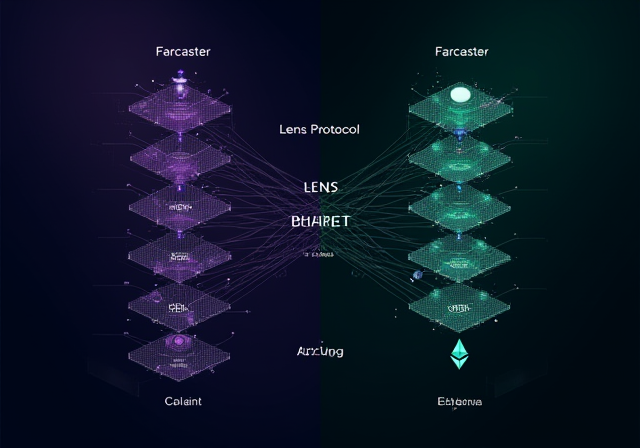
Farcaster vs Lens 2026: Which On-Chain Social Network Should You Pick?
A side-by-side comparison of Farcaster and Lens Protocol in 2026 across architecture, active users, monetization, privacy and ecosystem, with concrete picking advice.

What Is Story Protocol? What Putting IP On-Chain Actually Solves
Story Protocol is an L1 chain purpose-built for IP (intellectual property). It's not about NFT collectibles — it's about how IP gets licensed, derived from, and how royalties flow automatically. Here's the plain-English version.

Do Web3 Wallets Need KYC? How They Actually Differ from Traditional Accounts
Web3 wallets do not require KYC, and that single rule makes them fundamentally unlike a bank account, a CEX account, or a social account. This piece walks through the identity mechanism inside a Web3 wallet, why KYC is not required, and how ownership, recovery, and censorship resistance differ from traditional accounts.
)
What Is ENS? A Beginner's Guide to the Ethereum Name Service and .eth Domains
Traditional domains use DNS, onchain domains use ENS. This guide explains what ENS is, how to register a .eth name, how wallets and IPFS sites resolve it, and how it compares to SNS and other chain-native domain systems.
What Is SocialFi? Tokenizing Social Connections and Influence, and the Risks
You created the content and the traffic; the platform took the ad revenue. SocialFi wants to return that value to users and creators. How does it work, what are the plays, and where are the traps?

What Is DePIN? Building Real-World Infrastructure with Token Incentives
DePIN uses token incentives to get ordinary people to contribute hardware, decentrally building compute, storage, wireless and sensor infrastructure. Here's the logic, typical directions and risks.
What Is Web3? The Fundamental Difference From Web2, Explained
Understand Web3's core claims, typical applications, and real-world challenges through the "read—write—own" evolution, without getting swept up by slogans.