What Is Web3? The Fundamental Difference From Web2, Explained
Web3 is the proposed next stage of the internet—on top of “being able to read and write,” it emphasizes that you truly own your own assets and identity, through your wallet and on-chain records, rather than entrusting everything to platforms.
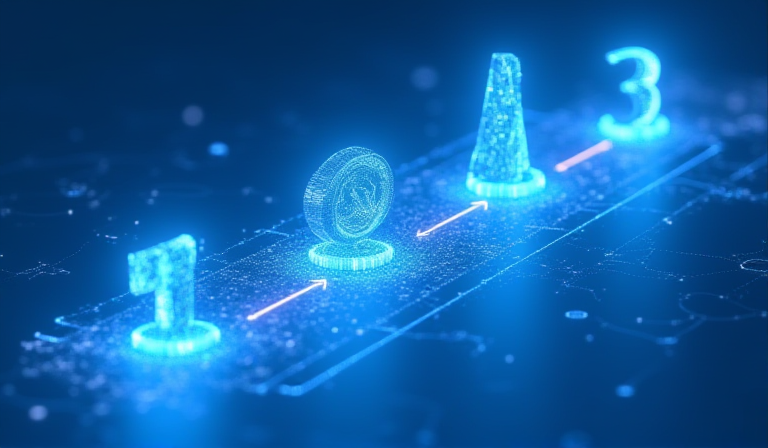
Read, Write, Own: Three Generations of the Internet
A common and easy-to-remember summary:
| Stage | Capability | Your Position |
|---|---|---|
| Web1 | Read-only | Browsing web pages |
| Web2 | Read and write | Posting content, but the platform owns your data and account |
| Web3 | Read, write, and own | Assets and identity belong to you, controlled via your wallet |
Web2 let everyone create, but it also gave platforms control over your data, social graph, and ability to monetize. Web3 aims to return that “control” to users.
Web3’s Core Claims
- Self-custody of assets: The assets in your wallet are controlled by your private key, and platforms can’t freeze or misappropriate them.
- Portable identity: One on-chain identity can be used across applications, without re-registering on every platform.
- Open and composable: Applications are built on open protocols, so data and functions can be freely combined.
- Built-in incentives: Tokens align the interests of users, developers, and the ecosystem.
Typical Application Forms
DeFi (finance), NFTs (ownership), DAOs (decentralized organizations), decentralized social and storage, on-chain games, and more are all concrete realizations of Web3. They share a common trait: users log in with a wallet, assets belong to themselves, and the rules are written into contracts.

The Other Side of Reality
Web3 is far from perfect. A few real challenges:
- High experience barrier: Private key management, gas, and cross-chain operations are unfriendly to newcomers.
- Performance and cost: On-chain resources are limited, and complex applications are still constrained.
- Unclear regulation: The compliance framework is still taking shape.
- Rampant speculation: Many projects are heavy on hype and light on value.
Web3 vs. Web2: An Intuitive Comparison
Talking about concepts alone is abstract, so here are a few examples where you can directly feel the difference:
- Accounts: In Web2, your account belongs to the platform and can be banned during disputes or rule violations; in Web3, you log in with your wallet, and no one can “ban” your private key and assets.
- Content and data: Web2 platforms control your follows, fans, and works and use them to monetize; in Web3, these can be recorded on-chain and owned by you—and can even be carried over to another application for continued use.
- Payments: A cross-border transfer in Web2 passes through layers of intermediaries, making it slow and expensive; with a Web3 wallet, it’s wallet-to-wallet, settling in minutes with no account opening.
- Rules: Web2 platforms can unilaterally change rules and adjust revenue splits at any time; Web3’s rules are written into public contracts, and changes often require community governance.
This doesn’t mean Web3 is better in every way—it still lags noticeably in usability, performance, and stability—but the direction of “control belongs to the user” is clear.
How an Everyday Person Takes the First Step
There’s no need to invest heavily right away; just proceed gradually:
- Install a self-custody wallet, and write down the seed phrase by hand to store offline—this is the first key to entering Web3 and the foundation of security.
- Start with small amounts, personally experience an on-chain transfer and a decentralized swap to build an intuitive understanding.
- Prioritize mainstream applications with long-proven reputations, and don’t get led around by gimmicks like “high yields” and “limited-time airdrops.”
- Keep learning about security—in Web3, there’s no support team to reverse your actions, and the responsibility for safety is entirely your own.
Frequently Asked Questions (FAQ)
- Is Web3 just speculating on coins? No. Speculation is just the surface; the core of Web3 is a technological paradigm where “users truly own their assets and data.”
- Can you use Web3 without a wallet? Almost not—the wallet is your “identity + account” in Web3.
- Is Web3 necessarily better than Web2? Not necessarily. Its direction is advanced, but the current experience has a high barrier and is a mixed bag, requiring rational judgment.
Key Takeaways
- Web3 = adding “ownership” on top of “read + write”—assets and identity belong to the user, controlled via the wallet.
- Core claims: self-custody, portable identity, open and composable, built-in incentives.
- Application forms: DeFi, NFTs, DAOs, decentralized social and storage, on-chain games, and more.
- Real-world challenges: high barrier, limited performance, unclear regulation, rampant speculation—judge real needs rationally.
Summary
The keyword of Web3 is “ownership”—moving control of data and assets back from platforms to users. It’s a direction, not a finished destination. View it rationally: focus on applications that actually solve a problem, and don’t get swept up by “disrupt everything” slogans.
This article is not investment advice.