After Years of Hype, Where Has StarkNet Actually Landed by 2026?
When StarkWare announced its zk L2 ambition back in 2021, nobody questioned the technical depth, but everyone asked the same question: when will it actually ship? In 2026 the answer is finally clear. StarkNet is running, and it has grown into a shape utterly unlike Optimism, Arbitrum or zkSync. This piece skips the introductory “what is a zk rollup” material, which is in the zk rollup explainer, and instead breaks StarkNet down dimension by dimension.
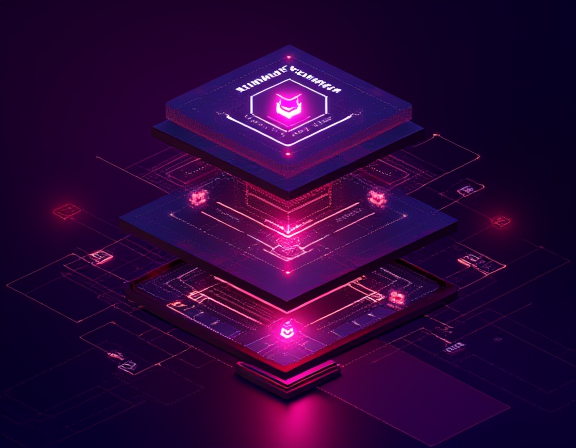
Locating StarkNet on the L2 map
Split the L2 map by route choice:
- Horizontal axis: Optimistic vs ZK
- Vertical axis: EVM equivalent vs custom VM
Arbitrum, Optimism and Base sit in “Optimistic + EVM equivalent”. zkSync Era, Scroll and Linea sit in “ZK + EVM equivalent”. StarkNet alone occupies “ZK + custom VM (Cairo)”. Polygon zkEVM is in between. That isolated quadrant explains StarkNet’s distinct pace, since it has to push the technology and rebuild the toolchain at the same time.
How far Cairo has evolved
StarkNet contracts are written in Cairo. In 2026 the active version is Cairo 1.x (technically the Cairo 2.x series). Cairo 1 replaced Cairo 0 in mid 2023 and brought the syntax close to Rust:
- Ownership and lifetime mental model borrowed from Rust
- Strong types, pattern matching, explicit error handling
- Compiler emits Sierra (intermediate representation), then CASM (the bytecode that is actually proven)
The Sierra layer is the most important Cairo 1 change. It guarantees that every Cairo program is fully provable, with no exotic paths that brick the prover. In Cairo 0 you could write code that stalled the prover. Cairo 1 closed that hole.
The standout 2026 tooling progress:
- scarb (package manager) is the de facto standard with a cargo-like feel
- starknet-foundry matches Foundry for testing, deployment and fork tests
- Cairo VM in Rust is live, making local simulation 50x faster than Cairo 0 days
Cairo still has a learning curve for newcomers. A Solidity dev moving over has to relearn unsigned math, felt types and the storage trait. That keeps the StarkNet developer community smaller than the Solidity world and is a direct cause of slower growth.
Proof recursion: proofs about proofs onchain
The most underrated engineering breakthrough of the past two years is proof recursion:
- First gen STARK proofs: one proof per block, posted to L1, verified by L1
- Second gen recursive proofs: aggregate many block proofs into a bigger proof and prove “all those proofs are valid”
- Third gen recursion plus Stone Prover: compress recursion to 3-4 levels with a single top proof landing onchain
Concrete effects:
| Phase | Onchain proof size per batch | Verification gas | L1 share of cost |
|---|---|---|---|
| Early 2023 (Cairo 0) | ~700KB | ~5M gas | >70% |
| Mid 2024 (Cairo 1) | ~250KB | ~3M gas | ~55% |
| Early 2026 (Stone + recursion) | ~80KB | ~1M gas | ~22% |
Plain version: StarkNet went from “every batch burns 2M gas on L1” to “every recursion round burns 1M gas but packs dozens of original batches inside”. That is why StarkNet keeps pace with L2 fee compression after what is EIP-4844.
The app-chain stack
StarkNet is also building something more ambitious by turning its tech stack into an app-chain framework:
- Madara: open source framework to spin up a standalone app-chain on the StarkNet stack
- Karnot / Kakarot Rollup: concrete app-chains built on Madara
- Paradex / dYdX v4 derivatives chain: high performance trading app-chains running directly on Cairo plus STARK
The same direction as Cosmos appchains, OP Stack’s superchain and Polygon CDK, with one specific edge. App-chain proofs can roll back into StarkNet main and then to L1, building a three-tier recursive proof tree. If that works end to end, L2 stops being a single chain and becomes a proof aggregation network.
TVL and activity: still catching up
StarkNet’s numbers against the L2 leaderboard:
| Metric | StarkNet 2026 | Arbitrum 2026 | Base 2026 |
|---|---|---|---|
| TVL | ~$800M | ~$18B | ~$8.5B |
| Daily actives | ~180k | ~1M | ~1.8M |
| Main DEX | Ekubo / mySwap | Camelot / Uniswap | Aerodrome |
| Top apps | Paradex / Pragma / Nostra | GMX / Pendle / Camelot | Aerodrome / Farcaster |
By the numbers StarkNet is the small one among the L2 leaders. The cause is not the tech but ecosystem gravity. The Cairo learning cost plus the lack of a strong user funnel (no Coinbase-like distribution) slows growth. The right move it did make was attracting niche performance-sensitive apps like high-frequency derivatives, ZK math protocols and onchain games that are willing to pay the Cairo learning tax for the ceiling.

Account abstraction is the underrated moat
StarkNet is the first L2 with native account abstraction. There is no EOA concept. Every account is a contract account. That means:
- Users get a smart account from day one
- Multisig, social recovery and Passkey login are defaults, not ERC-4337 patches
- Gas can be paid in any ERC-20 with no paymaster middleware
Smart accounts 2025 trend covers the broader space, but the StarkNet UX gap remains real in 2026. Other L2s are still bolting on AA. StarkNet treats it as the default.
Risks and unknowns
One, developer base size. The number of Cairo teams is still a fraction of Solidity teams. The long tail of apps grows slowly.
Two, EVM compatibility friction. Kakarot tries to run an EVM on top of Cairo but progress is slow. Cross-L2 arbitrage tools and bridge UX support StarkNet worse than other zk L2s.
Three, sequencer decentralization. StarkNet sequencers are still operated by StarkWare. The SN Stack decentralization plan was announced mid-2026 but the full switchover has not happened.
Four, STRK token economics under test. After the 2024 issuance volatility, prices stabilized in 2026 but the relationship between incentive emissions and real ecosystem growth remains contested.
Five, competition from zkSync and Scroll. All zk L2s push EVM equivalence. StarkNet’s Cairo-only stance will keep facing the question of whether the differentiation is worth the friction.
How to position StarkNet
If you are an ordinary user, treat StarkNet as the “niche but mature” option among the L2s in the Layer2 beginner guide. It is worth opening an account to feel native account abstraction.
If you are a DApp developer, migrating to Cairo only pays off short term if you build high-performance derivatives, ZK math protocols or onchain games.
If you build infrastructure, StarkNet’s Stone Prover plus Madara app-chain stack is one of the richest references for ZK engineering today.
Five things worth tracking in late 2026
- Cairo VM Rust port benchmarks: defines developer local experience
- Recursive proof L1 cadence and per-proof cost: roots StarkNet’s long term fee competitiveness
- Whether Madara apps cross 5 independent mainnets: validates the app-chain strategy
- Cross zk L2 verification interop between StarkNet zkSync and Scroll: defines whether multiple zk L2s merge into one proof fabric
- STARK hardware acceleration progress (GPU and ASIC shipments): decides whether prover costs can halve again
Treat those five as your StarkNet watch list for the next 6-12 months. StarkNet has always been the most technology-driven zk L2. Its story is not rapid growth but long term accumulation. Every six months those technical milestones start to surface as ecosystem indicators.