What Is a Smart Account? The 2026 Wallet Trend
From EIP-4337 to EIP-7702, Ethereum accounts are being reshaped. It took nearly a decade for “an account should be programmable” to reach mainnet users. ERC-4337 went live in 2023; Pectra activated EIP-7702 in May 2025, letting ordinary accounts temporarily acquire contract logic. Smart Accounts are no longer a research topic but the default direction for wallets. This article walks the path and the practical state in 2026.
The limits of traditional EOAs
To see why Smart Accounts matter, you first need to see what they fix.
Ethereum’s “Externally Owned Account” (EOA) is a 2014-whitepaper design — one key controls one address, every behavior hardcoded. Cryptographically clean but rough as a consumer product, with four core issues:
First, one signature scheme. EOAs only sign ECDSA secp256k1. Lose the key, lose everything — no recovery within EOA semantics.
Second, gas in ETH only. Even sending USDC requires ETH for gas. New users get blocked constantly.
Third, no “session” concept. Every transaction is signed individually — no way to authorize a DApp within a time window or spending cap.
Fourth, no atomic batching. “Approve then swap” needs two transactions, two gas payments, and cannot bundle into “all or nothing.”
Together these four are the root of years of Web3 UX complaints. Account abstraction moves accounts from “protocol-hardcoded” to “user-programmable.”
ERC-4337 and account abstraction
(/uploads/20260529/1780063445001-81354.png)
ERC-4337 went live on mainnet in March 2023, the first scheme to deliver account abstraction without modifying Ethereum consensus. Its idea is to build a parallel “meta transaction” system above the protocol layer:
- The user’s Smart Account is a smart contract, not an EOA
- The user builds a special structure called a UserOperation (target, calldata, signature, etc.) and posts it to an alternate mempool
- A role called the Bundler packages several UserOperations into one normal Ethereum transaction and submits to mainnet
- A standard contract called the EntryPoint receives that bundle, verifies each UserOperation’s signature and gas, and executes in order
The upside: no hard fork needed, any project can integrate independently. The downside: users must first deploy a smart contract account, deployment itself costs gas (~$5 equivalent at typical conditions), and the resulting address differs from the original EOA — creating a migration cost that slowed retail adoption of 4337.
The cumulative impact of ERC-4337 is that it defined the standard interface for Smart Accounts — Paymasters for gas, Session Keys for temporary delegation, Aggregators for signature batching. Later mechanisms all inherit that vocabulary. The details are covered in account abstraction.
EIP-7702 and what Pectra unlocked
(/uploads/20260529/1780063479765-70847.png)
The Pectra upgrade activated on May 7, 2025, and EIP-7702 is the most consequential proposal in it.
EIP-7702 solves ERC-4337’s biggest pain point — users no longer need a new address. It introduces a new transaction type for existing EOAs, allowing the EOA to temporarily “load” a piece of contract code within a single transaction, giving that ordinary account contract logic for that transaction’s duration. Afterward the code unloads and the address stays the same.
What does that mean concretely? Every EOA can acquire the full Smart Account feature set without changing address or migrating assets:
- One signature authorizing multiple operation batches
- Paying gas in stablecoins (via a Paymaster)
- Temporarily authorizing a DApp to act within a capped allowance
- Plugging in social recovery, multisig, Session Keys as modules
Since EIP-7702 went live, over 25% of active Ethereum wallets have used a 7702-type transaction at least once by Q1 2026 — far faster adoption than ERC-4337’s first two years.
Smart Account use cases in practice
After the protocol abstractions, the concrete scenarios.
Social recovery: lose a seed in a traditional wallet and it is gone. A Smart Account presets 3 to 5 guardian addresses (family, friends, backup wallets), with any 2 signatures resetting the controlling key. Argent, Safe, and Soul Wallet productized this and now layer Passkey biometric authorization as an additional recovery factor.
Batched transactions: “approve then swap then stake” becomes a single transaction, one signature, one gas payment. Uniswap and Aave default to this flow. A structural improvement to gas optimization.
Gas sponsorship (Paymaster): DApps let users pay gas in USDC, USDT, or pay nothing at all. For gaming, social, and onboarding flows this is a major shift — new users no longer need to buy ETH first.
Session keys: tired of signing every GameFi move? Authorize a temporary session key restricted to specific contracts, valid one hour, capped at 0.01 ETH. The key invalidates automatically when expired.
Custom signature algorithms: no longer locked to ECDSA secp256k1. Smart Accounts can use WebAuthn, Passkey, or post-quantum schemes. Enterprises can reuse existing HSM/SSO systems directly.
Wallet support today
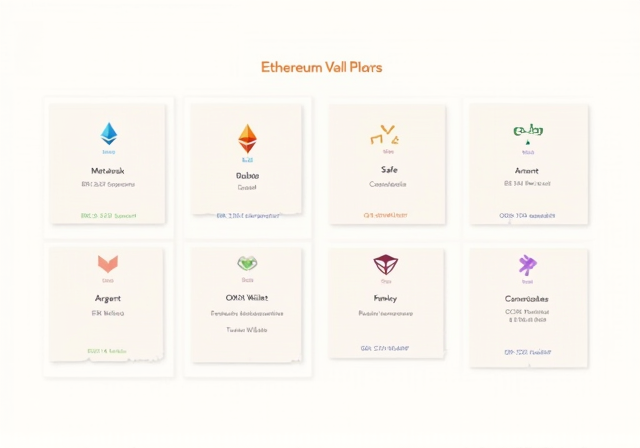
Wallets ranked by Smart Account support:
| Wallet | ERC-4337 support | EIP-7702 support | Notes |
|---|---|---|---|
| MetaMask | Partial (via Snaps) | From July 2025 | Mainstream onramp migrating |
| Rabby | Experimental | From September 2025 | Quick to follow upgrades |
| Safe (Multisig) | Native | Native | Institutional default |
| Argent | Native | Planned | Early 4337 adopter |
| Coinbase Smart Wallet | Native | Supported | Fully seedless |
| OKX Wallet | Experimental | H2 2025 | Tracks deep integration of the OKX exchange wallet |
| Trust Wallet | Partial | In progress | Mobile-first |
The variance is large enough that “which browser wallet to use” deserves a fresh comparison — see Rabby vs MetaMask for the granular breakdown.
Worth noting: Coinbase Smart Wallet is the most aggressive — it defaults to a Smart Account, users create via Passkey, and seed phrases never enter the picture. If “seedless onboarding” continues to spread, traditional EOA wallets face shrinking ground with retail newcomers.
What to watch over the next year
Three things define the next phase: standardized social recovery (vendors are incompatible, an ERC standard is missing); sustainable Paymaster economics (who pays gas long term); and Smart Account portability across Layer 2s (4337 contract accounts remain messy across chains). All three should progress through 2026.
The new definition of a wallet
A wallet is shifting from “a single key” to “a programmable agent” — its essence moves from “store the key” to “execute rules you set,” from a passive container into an active gateway. After EIP-7702 every user can try Smart Account capabilities without changing their address. Understanding Smart Accounts is now baseline literacy for staying in crypto through 2026.