Are "Yield-Bearing L2s" Like Mantle and Blast Actually Safe?
In the 2023-2024 L2 explosion, Mantle and Blast stood out not because their TPS was higher but because they did something nobody else did: bridge funds in and the balance starts growing on its own. That sounds like collecting DeFi interest, but it is structurally different. Mantle and Blast embed yield into the L2 itself, so the account balance accrues without any user action. This is a new direction in L2 design philosophy, called the “yield-bearing L2”. The question is whether these self-yielding chains are actually safe.
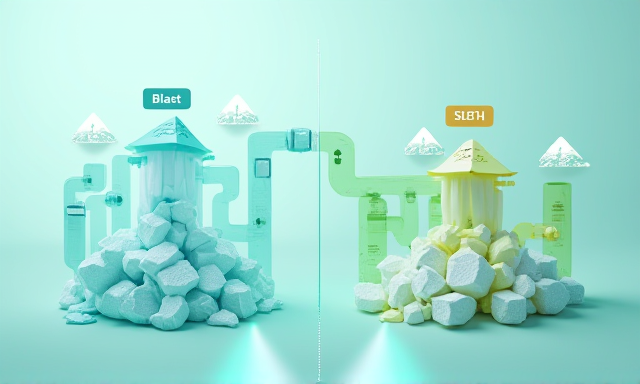
One line difference between Mantle and Blast
Both belong to the “yield-bearing L2” bucket but their yield sources differ quite a bit.
| Item | Mantle | Blast |
|---|---|---|
| Launch | Jul 2023 | Feb 2024 |
| Base architecture | OP Stack fork + EigenDA | OP Stack fork |
| ETH yield source | mETH liquid staking | Mainnet Lido stETH staking |
| Stablecoin yield source | mUSD via MakerDAO sDAI | USDB via MakerDAO sDAI |
| Default accrual | No, user opt-in | Yes, automatic on bridging |
| Native governance token | MNT | BLAST |
| 2026 TVL | ~$1.2B | ~$1.8B |
Mantle takes an infrastructure plus optional yield route. It is a general purpose L2 and mETH/mUSD are side products. Blast takes a yield by default route. All ETH and USDB bridged into Blast immediately start accruing, making yield the core sell.
Where the yield actually comes from
Before discussing risk look at how the yield is generated.
Blast ETH interest: bridge 1 ETH to Blast and the bridge contract takes that ETH back to mainnet, swaps it for Lido stETH, stETH earns about 3% annual staking yield, and Blast distributes that proportionally to your L2 ETH balance.
Blast USDB interest: USDC bridged to Blast becomes USDB. USDB reserves are placed in MakerDAO sDAI (4-5% annual) and the yield flows to users.
Mantle mETH yield: mETH is Mantle’s own liquid staking token, similar to Lido, integrating multiple validators, yielding about 3.2-3.5%. Users opt in by staking ETH for mETH.
Mantle mUSD yield: mUSD also rides sDAI yield, near identical to USDB logic but requires explicit minting.
The underlying yield sources are nearly identical, all coming from staking returns and MakerDAO’s onchain risk-free rate. The difference is whether the yield is invisibly piped into balances (Blast) or explicitly distributed via DeFi actions (Mantle).
Why yield-bearing L2s carry “structural” risk
Standard L2 risks: sequencer failure, bridge hacks, contract bugs, regulation. Yield-bearing L2s add several structural risks worth detailing.
One, depeg of the underlying yield asset. stETH depegged about 7% during the 2022 Luna crisis. Blast’s ETH balance is effectively a stETH mirror. The moment stETH depegs, every ETH balance on Blast loses notional value. That risk does not exist for vanilla ETH on Optimism.
Two, bridge assets are “operated”. Blast takes user ETH back to mainnet to stake it. That means the bridge is not a passive vault waiting for withdrawals, it is a yield strategy. If the strategy contract (even one as well known as Lido) breaks, Blast’s entire asset book breaks. That is the biggest structural difference versus Base and Arbitrum-style “passive” bridges.
Three, withdrawal time stacks. OP Stack L2s already carry a 7-day challenge window. Yield-bearing L2s add the stETH unstaking queue. In a panic, stETH liquidations on mainnet trade at discount, dragging the effective ETH price on Blast lower.
Four, the “interest payment” regulatory framing. Making “ETH earns yield by default” a core feature in the US almost begs to be classified as an unregistered security yield. The SEC reportedly sent informal questions to Blast in 2024. This is tightly linked with the broader posture in US SEC crypto regulation stance.
Five, token incentive misalignment. Blast used heavy BLAST token allocation to push deposits into yield-bearing assets. The token emission and the real underlying yield are not aligned. When incentives end, TVL can drop sharply. Blast already lived through one TVL contraction in late 2025.
How centralized each one is
On the decentralization spectrum:
- Mantle: controlled by BitDAO (former Bybit DAO), single sequencer, treasury managed by multisig, MNT distribution concentrated
- Blast: single sequencer, bridge asset reinvestment decisions executed by the Blast team, no decentralized staking pool governance
Both are more centralized than Base or Arbitrum. The root cause is structural. Operating a bridge that runs yield strategies requires an active operator. That is the trade in yield-bearing L2s. Default yield means accepting that the operator holds and uses user funds. If that bothers you, stick with passive L2s.
Safer practices for ordinary users
If you do want to collect yield-bearing L2 interest, a few rules limit exposure:
- Keep no more than 5% of net assets on any single yield-bearing L2
- After bridging, monitor the bridge contract balance via the Etherscan explorer guide to make sure assets are not being over-operated
- Check that mETH and USDB hold their 1:1 peg to ETH and USD on mainnet
- Avoid “stacked recursive borrowing on yield-bearing L2 assets”, the shared cause behind several 2024 Blast liquidation events
- Withdraw in tranches rather than all at once to avoid being capped during temporary bridge illiquidity
Layer that onto the trust assumptions explained in the Layer2 beginner guide and you will compare yield-bearing L2s far better than by APY alone.

Are they still worth using in 2026?
Two clear evaluation rails:
- If you specifically want ETH to accrue yield without you doing anything: Blast still has the best UX, but treat it as an advanced stETH derivative, not as “regular L2 plus interest”.
- If you only want to run DApps: Mantle is more general purpose. EigenDA data availability gives new DApps more stable performance, but the yield story is much weaker than Blast, so it feels more like “regular L2 with optional yield”.
The reality going into 2026 is that “yield by default” is losing its edge. Several L2s can deliver added ETH yield via EigenLayer restaking with liquid restaking tokens (see EigenLayer restaking). Blast’s moat is being filled in from the outside by application-layer stacking.
Where yield-bearing L2s could evolve
Over a longer horizon, yield-bearing L2s represent L2 chains stopping being neutral pipes and adopting financial-strategy properties. That is a new direction, and it means L2s start to look more like DeFi protocols, evaluated on risk, regulation and operational efficiency like protocols rather than infrastructure. Likely paths over the next 2-3 years:
- Deep integration between yield-bearing L2s and restaking protocols (a chain natively consuming EigenLayer AVS yield)
- Packaging bridge assets as tradable chain-level yield tokens (similar to Pendle stripping yield)
- A regulatory reset that turns “interest payments” from default to opt-in
- General-purpose L2s adding plug-in yield accounts, erasing the differentiation
Whichever way it goes, the key principle for ordinary users is to never treat chain-level interest as risk-free interest. They sound similar but the risk stack differs by a full layer. Treating a yield-bearing L2 as a chained DeFi strategy is the framing that avoids the most common error.