ASIC vs GPU Miners: What's the Real Difference Between the Two Mining Paths?
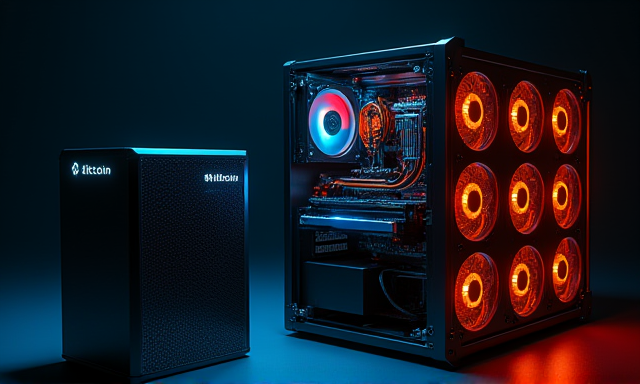
Specialized versus general. That single sentence is essentially the entire disagreement between ASIC and GPU mining. An ASIC is a custom tool built for one specific algorithm — it does one thing and pushes it to the limit. A GPU is more like a Swiss Army knife: less efficient than an ASIC, but able to switch between many algorithms with ease. Once you understand that split, almost every question about mining hardware, power bills, and payback periods falls onto the same axis.
How they work: custom silicon vs general parallel compute
ASIC stands for Application-Specific Integrated Circuit. From the moment the chip is taped out, a particular hashing algorithm — SHA-256 for Bitcoin, Scrypt for Litecoin, and so on — is burned into the hardware. The circuit is optimized only for that math, skipping the bloat of a general processor. The payoff is dramatic: at the same wattage, an ASIC can deliver tens or even hundreds of times the hashrate of a GPU. The price is just as clear: switching to a different algorithm or coin is essentially impossible. The hardware’s fate is welded to one chain.
A GPU takes the opposite approach. Originally designed for graphics rendering, it can run massive amounts of small calculations in parallel, which happens to fit most PoW algorithms well. Because it isn’t built for any single algorithm, it is less efficient per watt than an ASIC, but enormously more flexible: mine ETC today, switch to a fresh small coin tomorrow, all with a firmware tweak and a new pool address.
What coins fit each: the algorithm decides everything
The coin you want to mine determines what hardware you can use, and the rule is stricter than most newcomers expect.
- SHA-256 (Bitcoin, BCH): total ASIC domination. GPUs were pushed out back in 2013.
- Scrypt (Litecoin, Dogecoin merge-mined): also pure ASIC territory. GPUs have no real chance.
- Ethash / Etchash (Ethereum Classic, etc.): long a GPU stronghold, with some ASIC pressure now, but GPUs still have a seat at the table.
- RandomX (Monero): deliberately ASIC-resistant. CPUs actually outperform GPUs here.
- kHeavyHash, Autolykos, and newer algorithms: typically pitched as GPU-friendly — but the moment the coin gets valuable, a custom ASIC will start showing up.
A pattern emerges. Any major coin with enough market cap and a stable algorithm will eventually attract ASIC manufacturers, and GPU miners get squeezed out. So someone choosing GPUs is really betting on algorithm diversity and short-term arbitrage windows, not on the long-term dominance of any one chain.
Hashrate, power, and cost: one table tells the story
| Dimension | ASIC miner | GPU miner |
|---|---|---|
| Hashrate per machine | Extremely high, one algorithm only | Moderate, several algorithms available |
| Energy efficiency (J/TH or equivalent) | Excellent, mass-produced silicon | Higher, general-purpose overhead |
| Upfront cost | A few thousand to tens of thousands of USD per unit | A few hundred to over a thousand per high-end GPU, built into multi-card rigs |
| Noise and cooling | Extremely loud, basically requires a mining facility | More manageable, still needs good airflow |
| Depreciation | New generations every 1–2 years, fast value loss | Backed by a used-gaming market, better resale |
| Flexibility | Essentially zero, locked to one algorithm | High — switch coins, or even repurpose for AI inference |
| Revenue volatility | Tied to one coin | Can rotate to the most profitable algorithm |
In one line: ASICs compete on scale and electricity prices; GPUs compete on coin-picking and timing. The first is a factory, the second is a workshop. Both can make money — but in very different ways.

What’s actually realistic for an individual
Pulling the view back to a single person with a few thousand dollars who wants to mine, there aren’t that many viable paths.
The first is buying a new or used ASIC and pointing it at Bitcoin. It sounds hardcore, but the hard part isn’t the box — it’s everything around it: power under 5 cents per kWh, somewhere to host it, tolerance for 70+ dB of noise, a way to deal with tens of kilograms of retired gear. Few homes can sustain an ASIC long-term, so most people end up hosting at a mining farm, which is functionally similar to buying cloud hashrate directly.
The second is building a GPU rig. The barrier looks lower — a 4-to-8-card machine can live in a garage. But after Ethereum moved to PoS in 2022, the menu of high-quality GPU coins shrank dramatically. What’s left tends to be small caps with short algorithm lifespans; you can spend months chasing payback only to see an ASIC arrive or the chain pivot. The real upside for GPUs has shifted toward non-mining uses — AI inference rentals, rendering work, even just dropping the card back into a gaming PC.
The third is skipping miners entirely and exposing yourself to mining through other channels: mining-company equities, staking elsewhere, or simply tracking the bitcoin-halving cycle as part of your overall thesis. No depreciation, no noise, no power bill — much friendlier for anyone unwilling to turn their living room into a mine site.
Lined up next to each other, picking the path that fits your situation is far more useful than arguing which silicon is “better.”
One underrated variable: grid and regulation
Many people only run the hardware math and forget that mining is extremely sensitive to electricity prices and policy. The same S21 might pay back in two years during Sichuan’s wet season and never pay back in much of Europe. Government attitudes also swing constantly — outright bans in some places, green-power incentives in others. A miner’s effective lifespan depends not just on the silicon, but on the grid and policy environment around it.
GPUs are slightly better insulated here: when mining stops being profitable, you can sell them, run AI workloads, or drop them back into a gaming PC. An ASIC that loses its deployment home is basically scrap. That hidden cost is the most underrated risk on the ASIC side.
Hardware is a long bet
Stepping back, the ASIC-vs-GPU debate is really two business logics. One bets on long-term dominance of one chain, trading flexibility for raw efficiency. The other bets on algorithm diversity and timing, trading efficiency for pivot ability. Neither is universally right; what matters is whether it matches your power costs, your space, and your risk tolerance. Hardware is a long decision, and choosing wrong can quietly burn a year. That isn’t a scare line, just the actual rhythm of the business. Not investment advice.