Advanced Funding Rate Arbitrage in 2026: Perp vs Spot, Cross-Exchange Hedging, and Dynamic Rebalancing in Depth
If you already know what a funding rate is and which side pays whom on a perpetual, this post starts where most tutorials stop: actually keeping the money. Funding-rate arbitrage is still one of the most reliable income sources in crypto quant in 2026, but the people pulling consistent 15%+ a year and the people on Twitter promising “casual 50% a year” are two different populations. The gap is all execution.
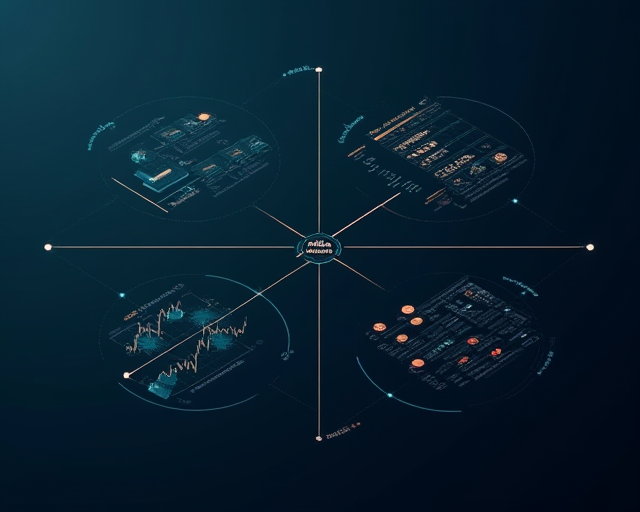
Four structures, side by side
The advanced playbook fits into four buckets. The table first:
| Structure | Long leg | Short leg | When it works | Realistic APR |
|---|---|---|---|---|
| Spot vs perp delta neutral | Spot BTC/ETH | Same-coin perp short | Funding persistently positive | 8-20% |
| Cross-exchange same-coin hedge | Long on venue A | Short on venue B | A’s funding very negative, B’s positive | 10-30% |
| Cross-instrument basis | Quarterly future long | Perp short (or reverse) | Anomalous basis spread | 15-25% |
| Dynamic rebalanced funding portfolio | Multi-asset spot longs | Per-asset perp shorts, weights driven by live funding | No directional bet | 12-22% |
Don’t chase the high-APR number — each one comes with different capital usage, risk exposure, and operational cost. Below, one by one.
Structure one: spot vs perp delta neutral
The most classic and the best entry into “advanced”. Logic is simple — buy spot, short an equivalent perp, cancel out price risk, harvest funding.
Sounds trivial. Three details actually decide PnL:
- Funding is not flat 0.01%: the long-run mean of perp funding is roughly 0.01% per 8 hours (about 11% annualised), but only persistently positive in bull-skewed markets. In a bear or range it can sit at zero or negative. The strategy is regime-conditional.
- You are not truly delta neutral: price moves change the notional of each leg, drift accumulates, you have to rebalance.
- Margin management: the perp short needs margin. When BTC rips, the perp leg shows a mark-to-market loss; even though your spot leg gains, the margin doesn’t auto-flow between accounts. Hit the maintenance line and you get liquidated.
- Fees and execution: entries and exits both cost; using maker orders cuts roughly half but fill rates suffer.
Practical rule: enter when the 30-day mean funding is above roughly 0.005% per 8h, keep margin ratio above 200% at all times, and sweep excess margin or top up regularly. For the funding mechanics themselves, start with funding rate primer.

Structure two: cross-exchange same-coin perp hedge
Funding rates for the same coin on different venues are routinely different, sometimes by multiples. Short the venue with high funding, long the one with low (or negative) funding, harvest the spread.
This anomaly persists because:
- User mix differs (retail-heavy vs institution-heavy), so directional skew differs.
- Big news triggers retail crowding on retail-heavy venues first, spiking funding.
- Depth differences cause short-term price dislocation.
Cost: counterparty risk doubles. You hold balances on two CEXes and any one failure breaks the strategy. Pick top-tier venues and cap single-venue exposure at 30% of total capital.
Other details:
- Bridge cost between legs: when one side loses, you need to ship collateral over. Withdrawals plus gas plus transit time all count.
- Funding settlement windows differ: 4h vs 8h means the strategy’s rebalance frequency has to align.
- Price divergence widening: if the venues do not reconverge, both legs need top-ups simultaneously, which strains capital.
Use the top exchanges comparison when picking the two venues — depth matters more than rebate level.
Structure three: cross-instrument basis arbitrage
Trade the spread between futures and spot. If the quarterly future trades at a 5% premium, in theory long spot + short the quarterly captures 5% at expiry. In crypto the more common variant is perp vs quarterly basis, since perps have no expiry but quarterlies do converge.
Pain points:
- Quarterly liquidity decays into expiry, so rolls get expensive.
- Basis and funding are coupled: looking at one without the other misprices the spread.
- Capital usage is higher: you may hold spot, perp, and quarterly simultaneously, stacking margin.
This one is probably not for retail. The capital and operational threshold are real; better suited to small shops with dedicated market-making and hedging plumbing.
Structure four: dynamic rebalanced funding portfolio
The most advanced. Combine the first three into one book and rank coins by live funding, weight dynamically, putting capital where funding is highest.
Pseudocode roughly:
for each rebalance window (e.g., every 4 hours):
    fetch funding rates for all USDT perps
    rank by 7-day mean funding
    pick top 5 with funding > threshold
    target weights = funding-proportional, capped at 30% per asset
    rebalance long-spot + short-perp accordingly
Benefit: no concentrated bet, smoother PnL, captures the right tail of funding distribution. Difficulties:
- Small-cap spot liquidity is thin, slippage is real.
- Funding rankings rotate fast, friction adds up.
- Small-cap perp liquidations are violent — margin must be sized per asset.
Suggested parameters: per-coin max weight 30%, rebalance every 4-8 hours, entry threshold 0.01%/8h, liquidation distance always 30%+.
A risk list that can wipe you in a single night
Print this and keep it next to your trading screen:
- Exchange collapse or withdrawal freeze: FTX taught the lesson. Splitting balances is the only defence.
- Perp rule changes: funding formula, margin tiers, liquidation rules can all change with little notice.
- Stablecoin depeg: USDT or USDC slipping pulls margin values around and indirectly liquidates positions.
- On-chain gas spikes: cross-exchange transfers can lose a week of profit in a single Ethereum congestion window.
- Both legs blowing simultaneously: a perp short being liquidated in a rip while spot gaps down on a venue-specific flash crash — the joint probability is higher than people assume.
The cross-chain bridge hack history is a useful reminder of how infrastructure can swallow a “risk-free” arbitrage whole.
Realistic return expectations
Small shops doing this well run at 12-25% annualised. Anything higher either rides heavy leverage or harvests a short-lived window. Pushing for 50%+ almost certainly means stacking directional exposure, at which point it is not arbitrage. If you’re starting, target 8-15% and your survival probability is highest; once that runs clean for six months, scale up or add coins.
Treat arbitrage as a discipline job
Funding arbitrage is not sexy. There is no AI dazzle, no meme rocket. The whole point is trading discipline and capital management for stable cashflow — checking funding daily, checking margin daily, doing a structure review weekly. The number of people who stay with it for six months is small, but those who do produce equity curves smoother than 90% of directional traders. That kind of smooth is its own rare asset in this market.