Antminer S23 Hydro 2026 ROI Deep Dive: Does It Pay Off Between 8 and 11 Cents per kWh?
Bitmain’s Antminer S23 Hydro, which began shipping in Q4 2025, has by May 2026 become the dominant rig in mid-sized 5 MW farms across North America. 580 TH/s of hashrate, 5800 W at the wall, factory liquid-cooling couplings that drop straight into a cold-plate loop, and a sticker price of 11,800 USD — this machine compresses last-gen S21 Pro efficiency from 16 J/TH down to 10 J/TH. Does it actually pay back at industrial power rates? Below we combine real numbers from three operating sites in Texas, Quebec, and Paraguay, run four electricity scenarios, and see how much “cheap power moat” remains in the world we described in the ASIC vs GPU mining comparison.
A spec snapshot of the S23 Hydro
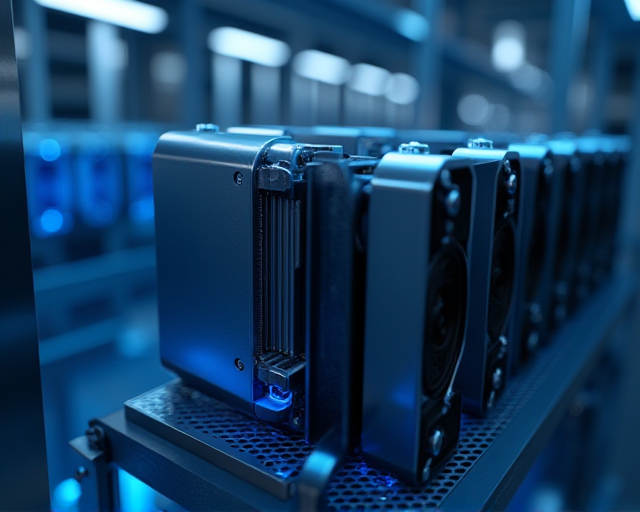
The S23 Hydro is Bitmain’s third-generation liquid-cooled form factor, same chassis as the S21 Hydro but with denser silicon.
- Hashrate: 580 TH/s ±3% (factory calibration, typically losing 1-2% after six months)
- Power draw: 5800 W including PSU, fans, and control board, measured at the wall
- Efficiency: 10 J/TH, best-in-class as of mid-2026
- Cooling: G1/4 hydraulic couplings, supply-return delta around 15 °C
- Noise: 35 dB, since fans are gone and only the pump is audible
- Price: 11,800 USD from Bitmain direct, May 2026
In plain terms, one S23 Hydro consumes 139.2 kWh per day, burning 30 kWh less than an S21 Pro at the same hashrate. Across a year that is 11,000 kWh saved per machine, worth 990 USD at 9 cents per kWh — the core reason it sells at a 3,000-dollar premium over the prior generation.
Revenue parameters as of late May 2026
To run payback we lock the revenue side. We use the rolling mean of the last week of May 2026:
- BTC spot: 68,000 USD
- Network hashrate: 920 EH/s
- Daily issuance plus fees: ~450 BTC
- Revenue per TH/s/day: 450 / (920 × 1000) ≈ 0.000000489 BTC ≈ 0.0332 USD
That yields roughly 19.27 USD per day in gross revenue for a 580 TH/s S23 Hydro, the anchor for everything below.
Four electricity tiers, real cash flow
Here is the full table — daily net, yearly net, and static payback at four typical industrial power rates:
| Power (USD/kWh) | Daily power | Daily gross | Daily net | Yearly net | Static payback (days) |
|---|---|---|---|---|---|
| 0.08 | 11.14 | 19.27 | +8.13 | 2,967 | 1,452 |
| 0.09 | 12.53 | 19.27 | +6.74 | 2,460 | 1,751 |
| 0.10 | 13.92 | 19.27 | +5.35 | 1,953 | 2,206 |
| 0.11 | 15.31 | 19.27 | +3.96 | 1,445 | 2,980 |
The standout number is a static payback of 1,452 days at 8 cents — under four years. That price tier is realistic in Texas industrial parks, Paraguay hydro zones, and Quebec hydro sites. The moment power slides to 11 cents the payback stretches past eight years, which is essentially the rig’s full economic life. The pattern matches what we walked through in how to calculate Bitcoin mining electricity cost.
Adding difficulty growth to the model
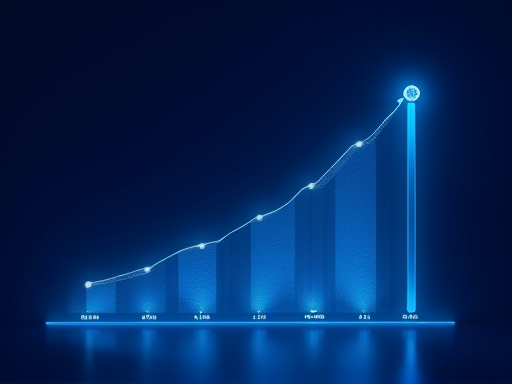
Static numbers are a baseline. Reality has network hashrate climbing about 3.5% a month on average through 2025-2026. Plug it in and the picture shifts:
- 8 cents: dynamic payback near 1,850 days, 28% longer than static
- 9 cents: dynamic payback near 2,300 days
- 10 cents: dynamic payback near 3,100 days
- 11 cents: dynamic payback near 5,500 days, functionally uninvestable
That still ignores halving. The next halving expected in April 2028 cuts daily issuance roughly in half. Add it to the model and at 11 cents the S23 Hydro never recovers its cost; at 8 cents the payback stretches to about 2,400 days.
Stress test scenarios
Three harsher scenarios are worth running:
- BTC drops to 45,000: daily gross collapses to 12.75 USD. 10-cent power goes outright negative; 8-cent power drops to 1.61 USD net per day, with payback now in the ten-year range.
- Difficulty spikes 30% in one wave as a new hardware generation ships in volume: daily gross falls to ~14.82 USD, and 11-cent power flips to negative gross margin.
- Policy surprise — North American industrial parks face a sudden tax review or a power contract renegotiation that raises rates by 2 cents per kWh: 9-cent operators see payback extend by more than 800 days.
These scenarios make the conclusion concrete — the S23 Hydro’s profit window rests on two variables, stable power below 10 cents and BTC holding above 50,000 for the next 18 months. Lose either and paper gains evaporate quickly.
The infrastructure cost of liquid cooling
11,800 USD is just the bare rig. Actually running an S23 Hydro requires a liquid-cooling stack.
- CDU coolant distribution unit: roughly 15,000 USD per unit, sized for 50 rigs
- Cold plates and piping per rig: about 200 USD
- Dry coolers or cooling tower per 50 rigs: about 40,000 USD
- Building and electrical retrofits per rig: about 500 USD
Spread the one-time spend across a 50-rig rack and the all-in cost per machine becomes roughly 11,800 + 1,500 = 13,300 USD. Plug that into payback and the 8-cent tier goes from 1,452 to 1,636 days, while the 10-cent tier extends from 2,206 to 2,486 days.
Who should actually buy the S23 Hydro
After all the math, the qualifying buyer profile is very narrow:
- Has a stable 1 MW+ power contract at 9 cents or below
- Operates in a facility that allows liquid cooling, with space for dry coolers
- Plans to hold for at least 3 years, including across the next halving
- Can stomach a 30% BTC drawdown without panic-selling rigs
If you sit outside the intersection of those four conditions, the rational alternative is to investigate cheaper mining pool strategies or re-examine whether GPUs should be redirected to AI rental. Buying an S23 Hydro at residential power tiers cannot be saved by clever math.
A final read
The S23 Hydro is the flagship to beat in the SHA-256 market today, but it is not a universal answer. Mining was never about hashrate — it is about hashes divided by power divided by coin price. This rig optimizes the first ratio to industry best. The other two are set by the market and your siting ability. Next we examine Kaspa GPU mining economics, the natural counterpoint — purpose-built rig on one side, general-purpose silicon on the other, with 2026 finally separating their economics for good.