How the Ethereum Foundation Interop Layer Testnet Went Live?
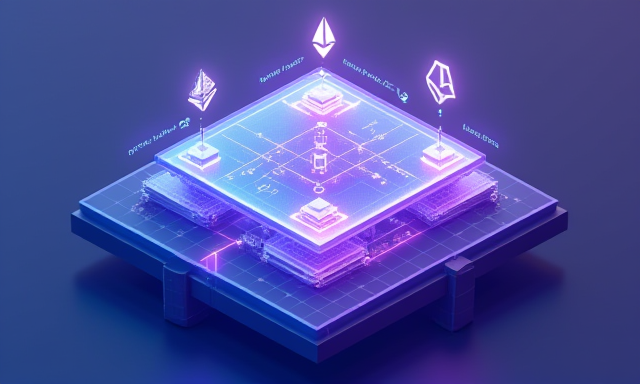
At 03:17 UTC on May 23, the Ethereum Foundation quietly tagged v0.1.0 in its public repository. A few hours later the official blog published Interop Layer Public Devnet is Live. The launch did not light up crypto Twitter the way a token release would, but for anyone tracking Layer 2 development, this moment matters more than most. It is the first time Ethereum has answered the L2-to-L2 fragmentation problem at the protocol layer rather than the middleware layer.
I am writing this as an event record, not a tutorial. The goal is to leave a clean reference point for later writing on L2 selection, ENS, SocialFi and other downstream topics.
Timeline reconstruction
The key milestones from this May, in order:
| Date (UTC) | Event |
|---|---|
| 2026-04-09 | EF publishes ERS-2026-04 draft, 4 weeks of comments |
| 2026-05-07 | Draft v3 finalised, crossL2Inbox precompile spec introduced |
| 2026-05-14 | First public dev call, 38 L2 teams signed up |
| 2026-05-20 | OP Stack, Arbitrum Orbit, Scroll and Linea complete local adapters |
| 2026-05-23 03:17 | v0.1.0 testnet live, genesis block created simultaneously on 5 L2s |
| 2026-05-26 | First successful cross-L2 atomic call, 14 second latency |
| 2026-05-28 | interop.ethereum.org explorer opens public preview |
One crucial detail: the testnet is not a new chain. It is a set of protocol specs + precompile contracts + cross-chain message buses running on existing L2s. I unpacked the technical design separately in the Interop Layer 2026 explainer; this post focuses on the event itself.
The pain points it actually solves
For readers new to the topic, the Interop Layer attacks three problems:
- State fragmentation across L2s: USDC on Arbitrum is not USDC on Optimism. A bridge is required to move it.
- Cross-chain message latency: today the dominant options are either a 7 day challenge window or a third-party relayer.
- Application splintering: the same dApp ends up deployed on 5 L2s, slicing liquidity, addresses and governance into pieces.
The design approach is to bake message passing into the protocol as a native precompile, with L1 providing the atomicity guarantee. One transaction can call contract A on OP Stack and contract B on Arbitrum, and if either side reverts, both revert.
A profile of the 38 participating teams
The bigger surprise was not the protocol design but the breadth of buy-in. The first wave of integrators announced by EF includes:
- OP Stack family: Optimism, Base, Worldchain, Zora
- Arbitrum Orbit family: Arbitrum One, Arbitrum Nova, XAI, ApeChain
- ZK family: Scroll, Linea, Polygon zkEVM, Taiko
- Appchains: Loot Chain, Story Protocol, Frax L2
- Observers: Coinbase L2 Tooling, Uniswap Labs, Aave Labs
Pair this list with the past 12 months of coordination changes inside the 2026 Ethereum Foundation reform, and you can see EF stepping into the role of a standards coordinator rather than just a protocol maintainer. That maps cleanly to the “social layer” framing Vitalik kept pushing through the 2026 roadmap. Technology decides what is possible, coordination decides what gets adopted.
First impressions from a developer
In the 24 hours after launch I ran four cross-L2 calls myself. Quick notes:
- Latency: Base to Arbitrum atomic call resolved in 14 seconds, faster than any third party bridge available today.
- Gas: the cross-L2 portion is settled on L1, around 28k gas, comparable to a basic ERC-20 transfer.
- Rollback: I forced a failure on the destination side; the source side automatically reverted, so atomicity holds in practice.
- Tooling: the
foundry-interopplugin is rough but already supports basic contract forking tests. - Error surfacing: this is the biggest pain point. Failures only return
INTEROP_REVERTwith no detailed reason.
My take is that the protocol is more mature than the tooling, which means SDKs and wallets will be the bottleneck for the next six months, not the protocol itself.
Pressure on wallets and infrastructure
The moment the testnet went live, wallet teams felt the pressure. MetaMask, Rabby and Frame all need to add:
- Cross-L2 transaction preview UI (one signature, two chains executing)
- Failure reason rendering (no standard exists yet, EF is coordinating)
- Aggregated fee display (split clearly between L1, source L2 and destination L2)
Rabby shipped a beta on May 28. MetaMask is targeting “early Q3”. Until wallets catch up, normal users cannot meaningfully use this feature. That is why EF carefully labelled this release as a developer preview, not mainnet.
Where it fits in 2026 major crypto events
If I had to rank H1 2026 events by long-term impact, two stand out:
- Ethereum Foundation restructuring landing
- Interop Layer going live on testnet
The first changes the social layer of the protocol. The second changes the technical layer. Together they finish off the most delayed sections of the 2024 Endgame roadmap. For end users, the visible change will arrive late in 2026: leading L2 apps will no longer require bridging, and the “network switch” button in wallets will quietly fade into the background.
If you want to keep tracking this thread, bookmark the 2026 crypto trends overview. I update the L2 interop section there monthly, and the next refresh will incorporate this testnet’s stability data alongside the mainnet timeline.