Wormhole vs LayerZero: Which Cross-Chain Bridge Architecture Wins
Nineteen guardian nodes against endpoint plus oracle plus relayer. That single line captures the essential disagreement between Wormhole and LayerZero — the first treats cross-chain communication as a committee of external witnesses signing off on what happened, the second splits the witness role into two: an oracle that watches reality and a relayer that ships the receipts. The two designs have been colliding across the cross-chain bridge landscape for years and neither has knocked the other out. To see which fits a given use case, the architecture details have to be unpacked.

Wormhole’s architecture: nineteen guardians signing
Wormhole is built on a multi-signature witness model. A network called the Guardian Network sits across every supported chain, made up of 19 independently operated nodes. When a user locks 100 USDC on Ethereum to move into Solana, each guardian observes that lock and signs it. Once thirteen signatures (a 2/3 quorum) are in, Solana-side contracts accept the message and mint 100 wUSDC.
The benefit is simple structure and fast finality — confirmations often arrive in under a minute. The cost is just as direct: Wormhole’s security equals the honesty and key custody of those nineteen entities. Any attacker who collects thirteen keys can mint out of thin air. The guardians are carefully selected institutions (Jump, Certus, Everstake, and so on), but the trust assumption is unambiguously human and centralized.
(/uploads/20260529/1780060678343-7936.png)
LayerZero’s architecture: splitting the witness role
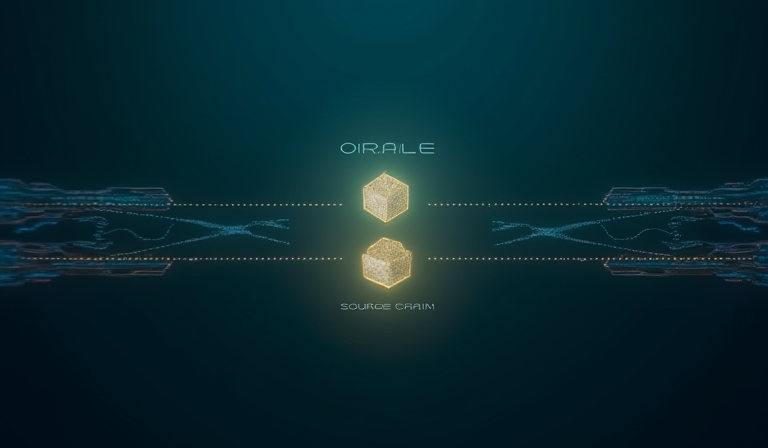
LayerZero’s central innovation is decoupling “what happened” from “how to ship it”. An Endpoint contract lives on every supported chain. A cross-chain message is delivered by an Oracle and a Relayer working in parallel: the oracle pushes the source chain’s block header to the destination, the relayer pushes the transaction’s Merkle proof, and the destination contract checks that both line up before acting.
The key property: as long as the oracle and relayer do not collude, the message is safe. If only the oracle is compromised the wrong block header arrives but the real proof fails to match; if only the relayer is compromised the inverse happens. That “both must turn evil at once” requirement dramatically reduces single-point exposure. The criticism, however, is that in practice the oracle and relayer are often run by the same small set of operators, so the non-collusion assumption is theoretical more than engineered. LayerZero v2 introduced DVNs (Decentralized Verifier Networks) that spread oracle duty across multiple independent verifiers, but ecosystem adoption is still in flux.
Comparing the security models
Boiling both designs into a table makes the contrast obvious.
| Dimension | Wormhole | LayerZero |
|---|---|---|
| Trust model | 13/19 multisig of guardians | Independent Oracle plus Relayer |
| Compromise threshold | Any 7 guardian collusion attempt | Oracle and Relayer must collude |
| Confirmation time | ~1 minute | Seconds to minutes, configurable |
| Supported chains | 30+ | 60+ |
| Protocol flexibility | Mostly fixed defaults | Apps choose Oracle/Relayer/DVN |
The row worth re-reading is “apps choose”. LayerZero does not force every application onto the same verification stack — each dApp picks the oracle and relayer combination it trusts. That pushes some of the security responsibility to integrators. A diligent project can be safer than the default; a careless one can be measurably weaker than Wormhole.
Supported chains and liquidity in practice
Beyond architecture, developers and users mostly care about chain coverage and where the liquidity actually lives.
- Wormhole: covers Ethereum, Solana, Aptos, Sui, Cosmos chains, and more — over thirty in total. It is the de facto standard for the Solana ecosystem. Buying a Solana meme coin from an Ethereum starting balance almost always routes through Wormhole.
- LayerZero: above sixty supported chains and far deeper EVM coverage. Almost every major L2 is integrated, and flagship cross-chain apps like Stargate and Radiant run on top of it. The end-to-end flow lines up with the LayerZero cross-chain guide.
On liquidity, Wormhole leans on Wormhole Bridge (lock-and-mint), while LayerZero anchors Stargate with native-asset pooled liquidity. For an end user, the choice often comes down to which bridge the destination chain’s apps already accept, not the protocol itself.
(/uploads/20260529/1780060721031-96110.png)
Historical risk: lessons from real incidents
Both protocols have a track record worth checking before reading marketing material.
- Wormhole, February 2022, $320 million stolen: an attacker exploited a signature verification flaw in the Solana-side bridge contract, forged a message claiming 120,000 ETH had been locked on Ethereum, and minted 120,000 wETH out of nothing. The guardians did nothing wrong; the contract code did. Jump Crypto covered the loss.
- LayerZero, ongoing debate: no comparable mainnet theft has hit LayerZero so far, but the community argument has not died. L2BEAT has long flagged its security model as “not fully transparent” because the default Oracle/Relayer operators are too concentrated.
The shared lesson is uncomfortable: bridge risk is half cryptography and consensus, and half engineering quality. Even an architecturally tight design can collapse when a contract line is wrong. The bigger picture is in the history of cross-chain bridge hacks.
How to actually choose
A practical filter using three questions:
- Are you bridging into Solana, Aptos, or Sui? Wormhole is essentially the default, with unmatched ecosystem depth.
- Are you bridging into EVM L2s or Cosmos chains? LayerZero covers more endpoints and hosts the major apps.
- Do you value speed and finality? Wormhole tends to be faster. Do you value configurable trust? LayerZero offers more knobs.
Every choice has a tradeoff. Wormhole exchanges simplicity for centralized trust; LayerZero exchanges flexibility for integration complexity. The same asset routed through different bridges sits under different security assumptions — the parallel to picking a mining pool is closer than it looks, because convenience and risk always live on opposite ends of the same seesaw.
Neither design is the final answer
The uncomfortable truth across the whole bridge sector: every bridge is strictly less secure than the two chains it connects. Nineteen guardians or oracle-plus-relayer, the structure is still an extra trust layer slotted between two networks that pride themselves on trust minimization. Wormhole trades modularity for efficiency; LayerZero trades simplicity for choice. Which is better depends on how long you intend to leave funds parked, how much value you are routing, and how critical the destination chain is for your strategy. Answer those three honestly before chasing whichever narrative is loudest this quarter.