What Is DAI? The Flagship Decentralized Stablecoin
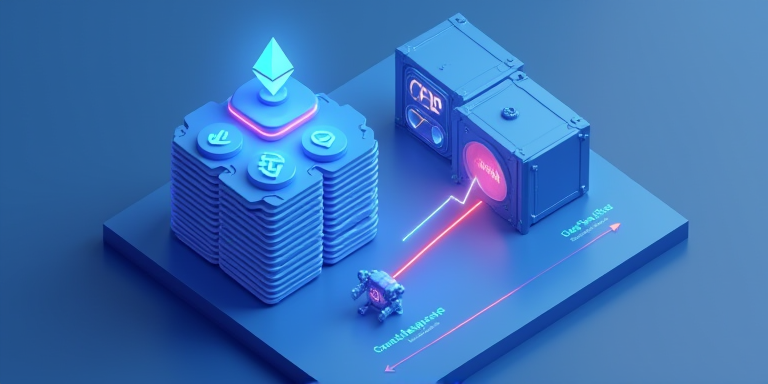
DAI is the largest “decentralized stablecoin” by market cap today. What makes it unusual is simple: DAI isn’t printed by a company. Users mint it by locking up ETH and other assets in a smart contract. That sounds odd, yet the mechanism has kept DAI tightly pegged at one dollar since 2018, without depending on a single bank account. This piece walks through how it works. (/uploads/20260529/1780061572037-48260.png)

DAI’s origin: meet MakerDAO
DAI is managed by MakerDAO, one of the oldest DeFi protocols. MakerDAO isn’t a company. It’s a set of smart contracts plus governance by MKR token holders. Its flagship product is DAI.
Minting DAI roughly works like this:
- A user locks ETH (or another whitelisted asset) into a contract called a CDP / Vault.
- Based on the current ETH price, the contract lets the user mint DAI up to a ceiling collateralization ratio.
- The user spends, trades or yield-farms with the freshly minted DAI.
- To unlock the ETH, the user pays back the equivalent DAI plus a stability fee. The contract burns that DAI and releases the ETH.
There’s no centralized issuer in the loop. DAI is something users effectively “borrow” against themselves.
Overcollateralization and liquidation: why DAI holds peg
DAI keeps its peg through a counter-intuitive but strict mechanism: overcollateralization.
Say ETH trades at $3,000 and MakerDAO sets the minimum ratio at 150%. You must deposit $150 of ETH to mint $100 of DAI. Why eat that overhead? Because ETH is volatile.
If ETH drops, your ratio falls. Cross the liquidation threshold and liquidation bots step in: they repay your debt with DAI, seize your ETH (plus a penalty). The mechanism guarantees that the system always has more collateral on hand than DAI in circulation.
That’s how DAI fundamentally differs from a fiat-backed stablecoin: it doesn’t rely on trusting an issuer, it relies on code, overcollateralization and forced liquidations.
DAI vs. USDC/USDT: completely different trust models
| Dimension | DAI | USDC / USDT |
|---|---|---|
| Issuer | Smart contracts + DAO | Circle / Tether and other firms |
| Reserves | ETH, stETH, RWA, USDC and other on-chain collateral | Off-chain USD, T-bills and similar |
| Trust a company? | Not directly (trust code + governance) | Yes |
| Regulatory risk | Lower, though RWA exposure raises it | High; issuers can be fined or frozen |
| Transparency | Real-time on chain | Depends on audit reports |
| Peg stability | Occasional small drift, long-run reverts | Rarely depegs, but it has happened |
USDC and USDT stabilize through “a credible issuer plus redemption rights,” while DAI stabilizes through “auctionable on-chain collateral.” Both work; their risk profiles look nothing alike. For a deeper centralized-stablecoin comparison, see USDC vs. USDT.
How DAI evolved: MCD, sDAI, USDS
DAI hasn’t been frozen in time. Several key upgrades shaped what we use today:
(/uploads/20260529/1780061609069-77691.png)
- 2017 Single-Collateral DAI (SCD): only ETH accepted as collateral. Modest scale.
- 2019 Multi-Collateral DAI (MCD): many assets accepted (WBTC, stETH, stablecoins themselves, RWA), pushing supply into the billions.
- 2023 sDAI (Savings DAI): deposit DAI into the DSR (DAI Savings Rate contract) and receive sDAI, an early “auto-compounding stablecoin.” If you want the broader category context, see yield-bearing stablecoins.
- 2024 USDS / Sky upgrade: MakerDAO rebranded as Sky and launched USDS, redeemable 1:1 with DAI and running alongside it. Governance, incentives and the role of MKR shifted (SKY took over some functions), but the underlying overcollateralization-plus-liquidation logic remained unchanged.
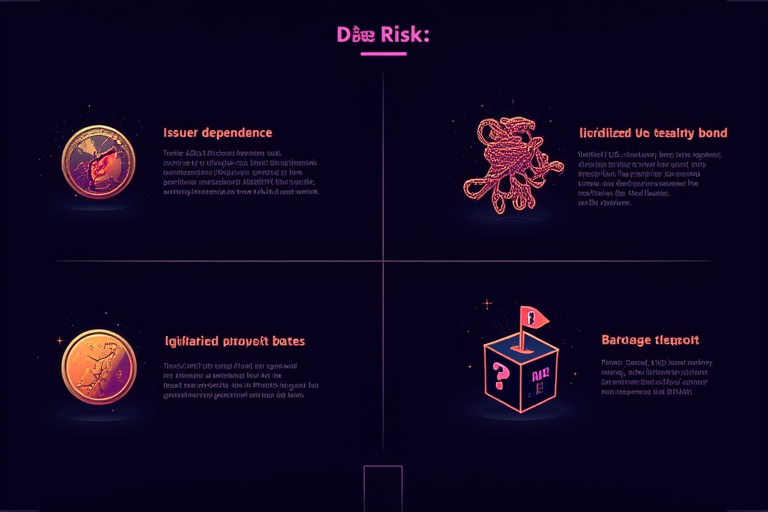
DAI’s real risks: don’t romanticize “decentralized”
DAI looks elegant on the page, but several real risks show up in practice:
- USDC dependence: to stabilize the peg, MakerDAO holds large amounts of USDC as collateral. When USDC wobbles (Silicon Valley Bank in 2023), DAI wobbles with it.
- RWA compliance exposure: piles of tokenized real-world assets (T-bills and the like) have entered the collateral pool. Yield rises, but so does off-chain regulatory risk.
- Liquidation spirals in extreme markets: on Black Thursday in March 2020, liquidation auctions struggled to clear, producing systemic bad debt.
- Governance capture: in principle a malicious MKR / SKY majority could vote through harmful parameter changes.
These aren’t far-fetched black swans. They have all happened. Understanding DAI means accepting that those costs are part of the package.
What people use DAI for
Day to day, users typically:
- Trade on Ethereum and L2s — avoid sitting in volatile ETH.
- Deposit into lending protocols (Aave, Spark) for yield.
- Use it as a base pair — most DEXs list DAI pairs.
- De-risk — swapping volatile holdings into DAI is a common bear-market move.
- Earn the DSR / sDAI rate — wrapping DAI into sDAI is a simple way to capture the protocol-native savings rate without leaving the Maker / Sky ecosystem.
The “decentralized” in decentralized stablecoins has a price
DAI’s story is a reminder: decentralization isn’t free. It buys censorship resistance, on-chain transparency and independence from banks, but it pays for those with messy liquidations, exposure to USDC and RWA, and governance risk. In 2026, DAI (and its successor USDS) remains the most important surviving case in decentralized stablecoins. To understand it is to see how far “code replacing companies” can really go in finance. Not investment advice.