Prediction Markets vs Gambling: Where the Legal Line Actually Sits
Horse racing is gambling, but betting on election probabilities gets classified as an “information market” in some jurisdictions. The mechanics look almost identical: you put money down, you pick an outcome, you settle when it resolves. Yet in the eyes of regulators, they end up in completely different buckets. One is heavily licensed gambling; the other is grey-but-tolerated financial derivative or “information tool.” The line is drawn not on the physical action but on what regulators decide the activity is for.

Almost identical mechanics
At the contract level they look the same. Bet 10 dollars on Horse 3, lose it or get paid the odds. Buy 0.32 USDC of a candidate’s YES, lose it or get paid 1 USDC. The difference:
- Bookmaker odds are set by the house, with margin baked into implied probability.
- Prediction-market prices come from two-sided trading with no central rake — the price is the implied probability. If that distinction is fuzzy, the Polymarket beginner tutorial covers it.
The mechanics are nearly identical; the structural difference exists. But what the law cares about is neither — it cares about the social function of the activity.
Why regulators are conflicted
The case for legitimacy rests on three claims:
- Price discovery — markets fold scattered information into one number that often beats individual polls.
- Policy research — CFTC granted Iowa Electronic Markets (IEM) an academic exemption because it was treated as a research tool.
- Risk hedging — a farmer could in theory buy a “drought next year” YES contract as weather insurance.
The case against is just as direct:
- Most users aren’t hedging, they’re betting — even supporters concede this.
- Outcomes can be manipulated — thin markets get pushed by tens of thousands of dollars into distorted prices.
- Consumer protection — the original spirit of gambling law: stop financially unsophisticated people from ruining themselves on impulse.
Regulators are stuck because both sides actually have merit. So you get the pattern: CFTC and SEC repeatedly going after Kalshi and Polymarket, but always with exemptions, case-by-case approvals, and sandboxes left open.
The US CFTC, a moving target
The US has had the most dramatic regulatory arc:
- 2012: CFTC blocked Intrade from serving US users, calling some contracts gambling.
- 2018-2020: PredictIt operated under academic exemption with 850-user-per-market caps.
- 2022: Polymarket settled with CFTC for $1.4M and committed to geoblock the US.
- 2024: Kalshi sued CFTC over election contracts — and won.
- 2025 onward: Election contracts live on Kalshi in the US, Polymarket regained partial US access, but the broader question of “is this gambling” still hangs.
CFTC’s working line is pragmatic: if a contract fits the commodity framework, we’ll discuss compliance; if it’s pure entertainment betting, it belongs to state gambling commissions, not us. The boundary is a mess in practice.
UK, EU, Asia
The UK took a different road. The UK Gambling Commission explicitly classifies election betting as requiring a gambling license — Smarkets runs these markets legally, with license, KYC, and limits. Clear, but it cedes the “information market” framing entirely to the gambling industry’s existing rules.
EU is fragmented. Malta and Ireland are friendlier and often host operator licenses; Germany and France lean stricter, folding such products into gambling regimes. There’s no unified position, which is why prediction-market dApps in the EU lean on country-level IP blocks.
Asia is uniformly cautious. Japan, Singapore, and South Korea generally bar retail participation in offshore prediction markets and prosecute under gambling law. Hong Kong has financial derivatives infrastructure but no retail prediction-market license.
China specifically
Article 303 of China’s Criminal Law on gambling, the Public Security Administration Penalties, and the post-September-2017 line that “activities involving virtual currencies are illegal financial activities” stack into something more complicated than plain gambling.
A few factual observations (not legal advice):
- Using Polymarket at all sits on the border of “illegal financial activity” because USDC exchange and use are involved (per the September 24, 2021 notice).
- Repatriating winnings: converting on-chain USDC to RMB through OTC channels is one of the highest-pressure enforcement areas, with real exposure to aiding-and-abetting and money-laundering charges.
- Large bets: large sums on unresolved outcomes raise the odds of being treated as gambling under enforcement.
China’s stance reduces to: it’s not that prediction markets specifically are banned, it’s that every underlying rail is — payment, instrument, and conduct definition all fail. This is in line with the longer arc in China crypto regulation history.
How to protect yourself
If you live in an ambiguous jurisdiction:
Size discipline — enforcement scales with notional. Keep single trades at a level where you can absorb the legal risk fully.
Identity separation — keep a buffer between your on-chain wallet and your real identity; don’t reuse your exchange withdrawal address as your Polymarket address.
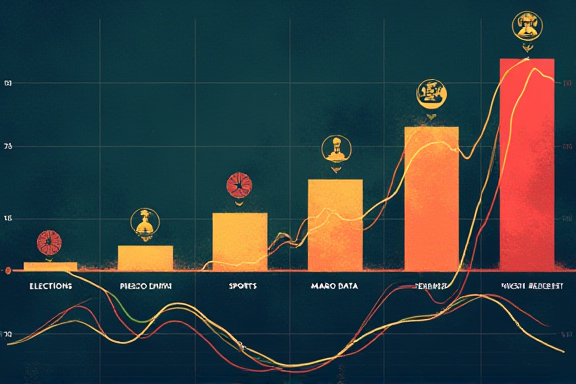
Contract choice — election, sports, and referendum contracts get the most regulatory attention. Macro data and product-launch contracts usually face less scrutiny. For picking specific contracts see Polymarket election trading.
Follow the news — regulatory positions shift every six months. RSS subscriptions to official agency feeds are the cheapest compliance investment available.
Don’t assume “financial” means “safe” — even in fully legal jurisdictions, prediction markets are high-risk, high-drawdown products. The financial risk is independent of the legal one, same lesson as spot vs futures.
A question without a final answer
Is a prediction market a financial instrument or gambling? Even law professors who study this for a living don’t agree. My read: functionally a financial instrument, visually gambling, regulatorily a gap. That gap won’t close fast, because closing it requires re-defining “gambling,” which costs far more than leaving the status quo blurry.
For ordinary users, accepting this is more useful than chasing a definitive answer. There may not be one, but there’s a clear risk map: which contracts carry low risk, what bet sizes invite scrutiny in your country, which actions move you from user to suspect.
Seeing whether it’s an opinion market or a slot machine decides whether you can use it.