What Does It Mean That OKX Opened PI Trading for US Users? A Signal Read for 2026 Compliance Expansion
In May 2026, OKX’s US subsite (okx.us) announced PI Network spot trading for locally KYC-verified users. The headline drew real chatter on crypto Twitter. PI has always been a controversial project, and OKX listing it inside the US market is the kind of move that violates intuition. This piece unpacks the listing along three axes: compliance meaning, whether PI itself is worth a position, and what it signals for the broader “US KYC-ification” trend across exchanges in 2026.
What the announcement literally says
OKX’s US entity is the OKcoin USA which rebranded to okx.us, a compliance subsite. Through 2024 and 2025 it has been collecting MSB licenses and state money transmitter licenses. The interesting part of this listing is not “how great is PI” but OKX US choosing to list a token that the SEC has not publicly green-lit.
The unwritten rule among US compliant venues is to list only tokens the SEC has implicitly treated as commodities: BTC, ETH, SOL, DOGE. Anything in the gray zone of “potentially a security” is avoided. OKX listing PI says either its in-house legal team is confident PI is not a security, or the venue is willing to absorb the compliance risk for the user acquisition.
What PI actually is, and why it is debated
A quick recap of PI Network:
| Dimension | Detail |
|---|---|
| Origin | 2019, Stanford-linked team launching “mobile mining” |
| Mechanic | Open the app daily, tap a button, mine PI |
| Users | Cumulative reported above 60 million globally |
| Mainnet | Open Mainnet launched in 2025 |
| Controversy | Long accused of being a “referral pyramid”, opaque token distribution |
PI’s signature is a huge user base with a tiny crypto-native overlap. The bulk of the audience is non-crypto users in Southeast Asia, Africa, and Latin America, recruited through zero-cost mobile mining. Supporters call it a blueprint for Web3 mass adoption. Critics call it a referral pyramid dressed up in token language.
Why OKX picked this moment for the US
Drop the move into the 2026 compliance context and the calculus becomes clearer:
- SEC leadership change in early 2025: the new chair is softer than the Gensler era, gray-token enforcement intensity dropped
- MiCA went live in Europe: token categorization clarified abroad, internal pressure on US tightening eased
- Coinbase is unlikely to list PI: Coinbase’s listing taste is conservative, OKX faces no head-on competition
- PI’s non-crypto user base: net new users for a global exchange, conversion rates beat existing customer cross-sell
- Differentiated liquidity: OKX US needs a non-majors menu, Coinbase and Kraken already dominate the top names
In one line: OKX spotted a low-risk, high-traffic compliance window, and PI fits. Large user base, SEC unlikely to prioritize enforcement, Coinbase unwilling to touch it. Smart commercial choice.
Impact on PI price and ecosystem
Short term, the actual price impact from OKX US listing is limited. PI already trades on multiple tier-two exchanges in Asia, so the incremental US flow will not move price meaningfully in the first week. Medium term there are two effects:
- Liquidity expansion: US KYC users add spot depth, narrowing the bid-ask spread over time
- Narrative upgrade: from “gray token” to “supported by a compliant exchange”, a real psychological lift for the PI community
If you want to participate, internalize a few things first:
- PI’s token unlock pace ramps up after Open Mainnet, sell pressure is constant
- The application layer is thin, DApp count and TVL are insignificant, no real usage
- This is not the “narrative plus meme liquidity” model in Solana memecoin explosion. PI runs on “user base plus slow release”, a completely different cadence
- Sensible solo allocation caps in the single-digit percent range
The signal for the wider industry
The real significance of this move sits beyond PI itself. It points at a 2026 trend: “US KYC-ification” will accelerate, and rising exchanges will use differentiated token menus to grab cracks.
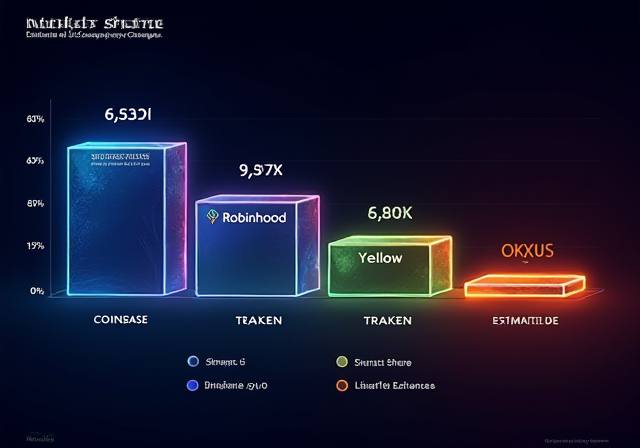
Concretely:
- Coinbase defends “majors plus deep compliance”
- Kraken defends “professional users plus compliant derivatives”
- Binance.US is recovering and needs differentiated tokens
- OKX.US enters with “gray-but-not-black” tokens like PI, HBAR, ALGO
- Robinhood pushes the “broker plus crypto” fusion
The PI listing is a public posture in this realignment. OKX is telling the market “I will list tokens Coinbase will not, provided the legal risk is manageable”. If similar listings follow over the next few months (HBAR derivatives, XRP extensions, PI variants), the move is systematic, not a one-off.
A useful contrast is OKX’s listing logic versus Binance’s, covered in Binance listing impact. Binance favors growth potential. OKX US favors compliance boundary expansion. Different markets, different strategies.
One overlooked boundary condition: OKX.us scoped PI to spot only, no margin, no perpetuals. The compliance team is clearly still cautious, even after listing. This “half-open” stance is the canonical 2026 path for gray tokens: open spot first, observe regulator reaction, then decide on derivatives. HBAR and ALGO both took 8 to 14 months between the two steps. If PI does not get a derivatives line before Q4 2026, the regulator feedback was probably tepid. If it does, the signal is meaningfully more positive.
One-line summary
OKX listing PI for US users is not about PI being a great asset. It is the best risk-adjusted differentiation play in the 2026 US compliant exchange market: large user base, low legal risk, Coinbase will not touch it. For regular users the move matters more than PI itself. It tells you the US crypto exchange league is re-sorting, and a fresh round of “differentiated token menu competition” has begun. If you want to harvest this compliance-expansion dividend, you have to watch announcements at OKX.US, Binance.US, and Bitstamp US, not just Coinbase.