How Do You Bridge ETH the Cheapest Way in 2026? Canonical vs LayerZero vs Across Tested
Bridging ETH looks trivial, but one wrong path can cost an extra $30. I helped a friend move 5 ETH to Base last month, he clicked the first bridge that came up in a search, and the round trip cost him $22 in extra fees plus 0.06 ETH in slippage — a $70 “lesson”. In this post I bench the three families of bridges that actually matter — canonical rollup bridges, LayerZero-family bridges, and liquidity bridges like Across — with the same amount, and finish with a pick-by-amount decision table you can open the next time you click Bridge. If you’ve never bridged before, start with our bridging primer and LayerZero guide.

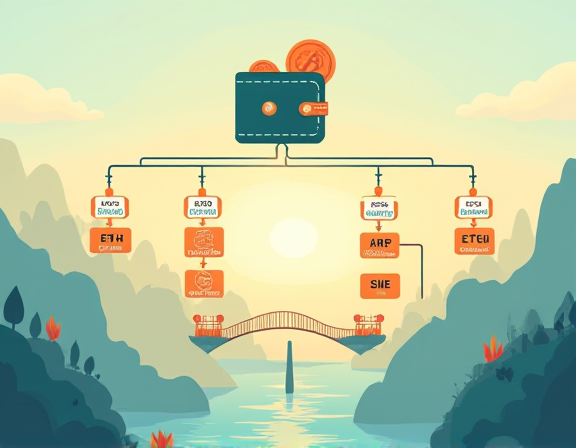
The three families, briefly
Canonical bridges — Arbitrum Bridge, Base Bridge, Optimism Gateway. Lock ETH on L1, mint native ETH on L2, 1:1 protocol-level peg that cannot break. Cost: withdrawal back to mainnet takes a 7-day challenge window on Optimistic Rollups, hours to minutes on ZK Rollups.
LayerZero-family bridges — Stargate, parts of Bungee and Squid. Use LayerZero messaging for cross-chain notifications and move assets through liquidity pools or synthetic mints. Strengths: dozens of chains, no challenge window. Weaknesses: extra protocol-layer risk plus slippage when pools are imbalanced.
Liquidity bridges — Across, Hop. Stock both chains with asset pools. After deposit on chain A, the destination chain releases funds within 30 seconds to 2 minutes via a relayer who fronts liquidity and gets repaid when the slow L2 exit queue clears.
Three different security models, speeds, and cost structures — don’t use the same yardstick on all three.
Live test: 1 ETH from mainnet to Base
Same wallet, same window (a 2026 weekday lunchtime). Gas fluctuates, numbers are order-of-magnitude.
| Path | Total fee (USD) | Time to land | Hidden cost |
|---|---|---|---|
| Base canonical bridge | ~$3.20 | ~10 min | 7-day exit when going back |
| Stargate (LayerZero) | ~$4.80 | ~3 min | Pool imbalance adds 0.02% slippage |
| Across | ~$2.10 | ~45 sec | Per-tx cap from pool liquidity |
You read that right — Across is the cheapest in this tier because the relayer amortizes the destination-side gas. But that’s at 1 ETH. At 0.05 ETH or 50 ETH the ordering flips.
Pick-a-bridge-by-amount table
| Amount | Path | Why |
|---|---|---|
| < 0.01 ETH | Don’t bridge, stack first | Mainnet gas eats >30% on any path |
| 0.01 - 0.5 ETH | Across | Relayer amortizes gas, also fastest |
| 0.5 - 5 ETH | Across or canonical | Use canonical if you’ll never need the 7-day exit |
| 5 - 50 ETH | Canonical | Cleanest security, $3-5 fee is rounding error |
| > 50 ETH | Multiple canonical hops | Pool slippage real, institutional volume goes native |
The rule: the bigger the amount, the more you want the canonical bridge. Canonical paths are protocol-level escrows, theoretically as safe as the L2 itself. Third-party bridges add a smart-contract risk layer — no amount of audits makes trading $1M in extra contract exposure for $30 in savings rational.
Common traps
Trap 1: search-engine fake bridges. base.org/bridge, bridge.arbitrum.io are the real ones, but the top two search results are often paid ads pointing at phishing sites. Always link through from the project’s official docs. Borrow the domain-check ritual from MetaMask phishing defense.
Trap 2: forgetting destination gas. Once on Base or Arbitrum you need some ETH to do anything. Most bridges auto-keep 0.001-0.005 ETH for “seed gas”, but some Across fast lanes deliver 100%, leaving you no ETH to sign the next transaction — particularly painful in multisig setups.
Trap 3: wrong bridge on the way back. Withdrawing ETH from Base to mainnet via canonical takes 7 days on Optimistic-style rollups. Across does it in 5 minutes for a 0.1%-0.3% fast fee. If you’re not in a hurry, save the fee; if you need mainnet liquidity now, the 0.2% is worth it.
Trap 4: do not generalize Optimistic experience to ZK chains. ZK Rollup canonical exits take hours, sometimes less, but the bridge fee is slightly higher because someone has to pay for the proof. See Arbitrum vs Optimism vs Base for the withdrawal-time table.
Trap 5: the slippage default. Stargate-style pools default to 0.5% slippage, which on 1 ETH is up to 0.005 ETH. Set it manually to ≤0.1% and split the order if the route fails.
The less obvious paths: Hop and Orbiter
Hop is still competitive on small amounts — same relayer pattern as Across, different incentive design. Orbiter is a lightweight cross-chain frontend out of China, optimized for the 0.05-2 ETH market with flat fees from $0.20 and zero slippage exposure — extremely beginner-friendly.
My personal stack: small (<0.5 ETH) on Orbiter or Across, mid on Across, large on canonical. Hop is still fine on Optimism-family chains but its share has been bleeding to Across since 2024, so new users should default to Across.

L1↔L1 and L2↔L2 are different problems
Everything above is the vertical problem — mainnet to/from L2. For horizontal bridges (Arbitrum to Base, Base to Polygon, etc.):
- You cannot use a canonical bridge, because none of the rollup teams ships an L2-to-L2 canonical route; you’d have to exit to mainnet and re-enter, paying twice
- Across, Hop, and Orbiter are the cheapest paths, since their relayers settle directly across the two L2s and skip mainnet gas entirely
- Stargate and LayerZero work too, but pool depth on niche chains can be thin
A real L2 → L2 hop usually costs $0.50 - $2 — five to ten times cheaper than routing through mainnet. Plenty of people in 2026 still default to the “mainnet middleman” pattern and pay extra gas for no reason.
Bridges are not a single button
Every bridge bakes in a trade-off — speed vs safety, cheap vs flexible, single-chain vs multi-chain. No single bridge wins — the optimal choice changes with amount and context. Next time you click Bridge, run through the decision table above so you don’t end up like my friend with the $70 “lesson”. One more habit worth adopting: every time you finish bridging, swing by Revoke.cash — bridge contracts leave behind approvals you should clean up.