Hardware Wallet Supply Chain Attacks: Cases and Defenses
You think factory-sealed equals safe? A hardware wallet bought second-hand or from a non-official channel may have been tampered with before you ever opened the box. This class of incident has recurred over the past three years, and victims often operated under the belief that “I bought it new.” They missed that a hardware wallet’s security model starts the moment the device leaves the factory, and every intermediary between then and your hand is a potential attack surface. This article unpacks supply chain attacks on hardware wallets.
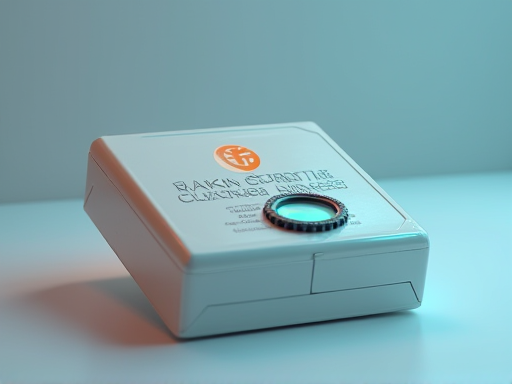
Three Typical Supply Chain Attack Patterns
Pattern one: preset seed phrases. The classic, cheap technique. Attackers open a new or refurbished hardware wallet, initialize it with a seed phrase of their own choosing as the “factory state,” then reseal the packaging. The victim, on receipt, sees either a device already initialized or a “factory recovery card” included in the box, and assumes it came that way. Once funds are deposited at that address, the attacker can drain it at will using their copy of the seed phrase. This has appeared repeatedly on eBay, Amazon third-party sellers, and Telegram retail groups.
Pattern two: firmware backdoor. A higher-skill attack. The attacker opens the device, removes the secure element or main MCU, flashes backdoored firmware, then reassembles. The backdoor might leak generated keys through a side channel (LED blinking, encoded data over USB), or seed the random number generator with a value the attacker can reconstruct, so the user’s “freshly generated” seed phrase is actually deterministically predictable. On the surface the device behaves normally — initialization, seed display, address generation all look correct.
Pattern three: fake packaging and counterfeit devices. Attackers build a visually identical copy of a hardware wallet — packaging, manual, anti-counterfeit sticker — and sell it through unofficial channels (social media ads, gray markets, second-hand platforms). Internally the PCB may be entirely counterfeit, the “secure element” is fake, and all security features are UI theater. After the user enters a seed phrase, the device transmits it via embedded Bluetooth or Wi-Fi back to the attacker.
Real Cases Worth Revisiting
2017 to 2018, Ledger preset-seed second-hand incidents. Multiple Reddit users reported that Ledger Nano S units bought “brand new sealed” from Amazon third-party sellers or eBay arrived with addresses already containing small test funds and an initialization wizard already skipped. Ledger officially clarified: any hardware wallet that requires using a pre-existing seed phrase should be returned immediately. Genuine devices ship uninitialized and require the user to generate the seed phrase on first use.
July 2020, Ledger customer database leak of 270,000 records. The leak was not seed phrases but names, emails, phone numbers, and shipping addresses. Over the next two years, addresses on that list received phishing emails branded as “Ledger security updates” and physical packages disguised as “replacement device” shipments. The replacement devices contained preset seed phrases. The episode demonstrates how a customer database leak amplifies supply chain attack efficiency: attackers know which addresses house Ledger users and can target deliveries.
2022, Trezor lookalike fabrication. Twitter researchers published a comparison: a device purchased from a “Trezor official discount channel” advertised on Telegram looked identical to Trezor One in case, silkscreen, and boot UI, but on teardown the PCB used an off-the-shelf STM32 MCU without Trezor’s actual entropy source and protection design. The device ran a fake initialization flow with seed phrases that were all preset.
2023, the Ledger Recover controversy (not a supply chain attack but related). Ledger introduced an optional Recover service that encrypted and split-backed-up seed phrases to three custodians. Although the feature was opt-in, the community pushed back hard because it implied the hardware layer was capable of exporting private-key-derived material. The episode made some users reconsider firmware update windows themselves as a kind of supply chain risk.

How to Verify Unboxing Safety
First step: inspect packaging and physical appearance. A new device should arrive with intact shrink-wrap, an unbroken tamper-evident seal, and no signs of reglued seams. Any indication of prior opening means stop. The recovery card included in the box must be blank. If the card is pre-printed or hand-written with a seed phrase, it is 100 percent supply chain compromise.
Second step: run attestation through the official app. Both Ledger Live and Trezor Suite perform a “genuine check” when connecting — the secure element signs a challenge with a factory-burned key, the app verifies with the manufacturer’s public key. This catches most cases of replaced firmware or swapped main chips, since the attacker does not have the manufacturer’s signing key. Any “genuine check failed” message, or the absence of an attestation flow at all, means stop using the device.
Third step: initialization must be your own seed generation. If the device boots straight to “enter recovery phrase” without offering “generate new seed phrase,” that is a red flag. Genuine units default to the generate-new-seed flow. Treat this step as non-skippable and you block 90 percent of preset-seed attacks.
Purchasing Channel Is the First Line of Defense
First choice: directly from the manufacturer. Ledger (ledger.com), Trezor (trezor.io), Keystone (keyst.one) all support direct online orders shipped through manufacturer-controlled logistics. Shortest supply chain.
Second choice: officially authorized distributors. Every manufacturer lists authorized resellers on their site. Any “agent,” “discount channel,” or social media link defaults to untrustworthy.
Avoid entirely: eBay, Amazon third-party sellers, second-hand platforms, Telegram groups, Discord DMs from “promoters.” These are where supply chain attacks distribute. Even genuine devices going through intermediaries cannot have their full chain verified. Combined with the multi-wallet stratification in the wallet guide and asset isolation from the security guide, a hardware wallet only delivers its promise if the purchase channel is controlled.
If your concern is software-layer phishing, MetaMask phishing defense covers the orthogonal class of risk — hardware wallets prevent hot-key theft but cannot stop a user from agreeing to sign a malicious Permit.
The Security Door Opens the Moment You Order
A hardware wallet’s security model does not start when you power it on. It starts at the last station of the factory line. Every person, warehouse, and shipping leg in between is a potential attack surface. Channel, unboxing verification, and initialization — skip any of the three and the safety the device offered you was only an illusion. Run through all three before your next order.