People Keep Saying Cosmos Is Dead, So What Does Its 2026 Ecosystem Map Actually Look Like?
When ATOM dropped from 14 USD to 4 USD in 2024, Cosmos is dead became a standard Twitter headline. Oddly, IBC bridge traffic hit record highs in 2025, dYdX’s own chain ran smoothly, and Celestia modular expansion entered mainstream narrative. Market sentiment and chain data split hard. This piece does not take a side, it asks is Cosmos still alive, and what does the 2026 ecosystem map look like, then unpacks it piece by piece.
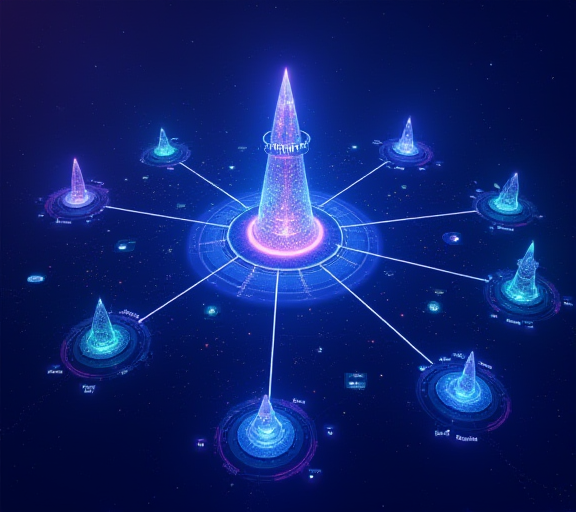
First, Clarify What Cosmos Even Means
A lot of people still think Cosmos equals the ATOM chain. In 2026 that view is outdated. Precisely:
- Cosmos Hub, the ATOM chain, just one chain in the ecosystem, not the center.
- Cosmos SDK, the open source framework for building independent app chains, used by almost every major app chain.
- IBC protocol, the cross chain communication standard, connecting 92 independent chains as of 2026.
- CometBFT consensus, formerly Tendermint, the underlying consensus engine, reused by 100 plus chains.
Only by separating these four layers can you see what “Cosmos is fine, ATOM the asset is undervalued” actually means. Same framing as the “more chains than tokens” angle in our notable L1s beyond ETH and Solana piece.
Latest IBC Flow Data
May 2026 IBC measurements:
| Metric | 2024 | May 2026 | Change |
|---|---|---|---|
| Connected chains | 56 | 92 | +64% |
| Monthly active addresses (cross chain) | 880k | 2.1m | +138% |
| Monthly cross chain value (USD) | 1.8b | 7.4b | +311% |
| Monthly IBC transfer count | 3.8m | 11m | +189% |
All four metrics doubled or more. No “Cosmos is dead” narrative can explain this away.
Worth noting, ATOM’s traffic share actually dropped, in 2024 about 30 percent of IBC transactions involved ATOM, in 2026 only 11 percent. In other words, the faster the ecosystem grows, the more ATOM becomes background. That is the eventual delivery of the no center architecture philosophy of Cosmos, and part of why ATOM price stays compressed.
A Map of Important App Chains
Here is a categorized list of the most active 2026 Cosmos app chains:
Finance and derivatives
- dYdX V4, migrated from Ethereum to a Cosmos independent chain, daily volume 1.8 to 2.5 billion USD, the financial flagship of Cosmos.
- Sei v2, high performance EVM compatible app chain, purpose built for market making and high frequency trading.
- Injective, on chain derivatives and RWA platform, TVL crossed 2.2 billion USD in 2026.
Modular and data availability
- Celestia, leader in modular blockchain, serving DA to 30 plus rollups. Detailed in our modular blockchain Celestia explainer.
- Saga, the game app chain factory, deployed 60 plus game specific chains.
DeFi and stablecoins
- Osmosis, largest Cosmos DEX, monthly volume around 1.8 billion USD.
- Kava, primary USDT liquidity hub on Cosmos.
- Neutron, the main battlefield for CosmWasm smart contracts.
AI and new narratives
- Berachain, technically Cosmos SDK plus EVM compatible, with its own PoL consensus, broke out in 2025 to 2026.
- Fetch.ai, pivoted to an AI agent network, part of the infrastructure runs on Cosmos.
Compare this list to early 2024 and almost every sector has a Cosmos based player in the top 5. That is why on chain metrics keep rising, the ecosystem is not winning at one point, it is blooming across the map.

Celestia Deserves Its Own Section, the Modular Engine
Celestia is the biggest variable of the past two years in Cosmos. It does not monetize through transaction volume, it monetizes by selling data availability to rollups. As of May 2026:
- Monthly DA demand, from 4 GB in 2024 to 62 GB.
- Paying rollup count, from 7 to 34.
- TIA staking ratio, stable at 72 percent, validator set expanded to 100.
- On chain fee revenue in USD, about 1.8 million monthly.
1.8 million USD monthly sounds small, but consider this is infrastructure type fee, independent of speculation and dependent on rollup deployment. Celestia is the first Cosmos ecosystem project to truly hit the picks and shovels economic curve.
More importantly, Celestia dragged Cosmos back into mainstream narrative. In 2024 mentioning Celestia DA in ETH L2 discussions was novel, in 2026 it is default. Detailed in our modular blockchain Celestia explainer.
Why Berachain Matters as a Disruptor
Berachain launched in 2025 with a novel PoL (Proof of Liquidity) model. Technically it is Cosmos SDK plus CometBFT under the hood, but the user side feels purely EVM. That combo lets it harvest two markets at once:
- For Cosmos natives, PoL turns liquidity equals stake into a native primitive.
- For Ethereum users, it is just a faster cheaper EVM L1.
As of May 2026 Berachain TVL is around 1.6 billion USD, trailing Solana peaks but already ahead of most peer chains launched in 2025. Its existence proves one thing, Cosmos SDK is not a niche framework, it is the default choice for any team building an app chain.
Why ATOM Will Not Pump
By this point a reader asks, with the ecosystem this strong, why has ATOM not moved? That deserves an honest answer.
One, ATOM lacks value capture
- IBC cross chain does not need ATOM for gas, app chains do not pay rent.
- Cosmos Hub does not force itself to be a central hub, so there is no demand side compulsion.
Two, ATOM v2 reform stalled
- The ICS (Interchain Security) idea of renting ATOM security never attracted many projects, few willing to pay rent.
- The 2025 aggressive inflation cut proposal failed to pass, inflation still sits at 7 to 10 percent.
Three, new narratives live on subchains
- Celestia, Berachain and dYdX do not directly funnel back to ATOM.
- This is the opposite of how BNB Smart Chain feeds value back to BNB, covered in our Layer 1 starter guide.
This does not mean ATOM must zero out, but it does mean ATOM is no longer the best proxy for Cosmos health. Watching IBC flow, Celestia revenue and dYdX volume tells you far more than the ATOM candle chart.
Key Watchpoints for Late 2026
In timeline order:
- Cosmos Hub v22 upgrade, scheduled for late 2026, first time inflation gets linked to stake utilization, expected to drop to 4 to 6 percent.
- IBC Eureka upgrade, opening cross chain communication to non Cosmos chains including Ethereum and Solana, likely expanding IBC reach further.
- Celestia Lemongrass upgrade, DA capacity doubles, expected to pull more rollups in.
- dYdX v5 roadmap, whether it adopts more aggressive on chain market making, affects derivatives market share trajectory.
Any one landing could shift market expectations of Cosmos.
Who Should Use Cosmos and Who Should Hold Cosmos Tokens
Three user perspectives for practical judgment:
- App developers, Cosmos SDK is essentially the most mature open source choice in 2026 for building an independent app chain. First choice unless you need extreme EVM compatibility.
- DeFi users, Osmosis, Injective and dYdX form a usable financial stack. UX is sharply better than 2023.
- Token investors, ATOM is not the top Cosmos pick. TIA, INJ, BERA, OSMO and DYDX as native app chain tokens give cleaner value capture exposure.
Internalize this and the Twitter shouting match between “Cosmos is dead” and “Cosmos resurrected” becomes obvious — both half right. The architecture is thriving and the single asset is struggling.