How to Snipe Solana Memecoins: A 4-Step Setup Guide
A 4-step Solana sniping setup — sounds like installing software. In reality, 60% of winning or losing on Solana memecoins is the tool stack, 30% is cadence, 10% is luck. Beginners don’t lose because they pick the wrong coin; they lose because tools are wrong, slippage is wrong, and exit execution is rusty. This piece sets the environment up step by step and explains the why behind each tool.
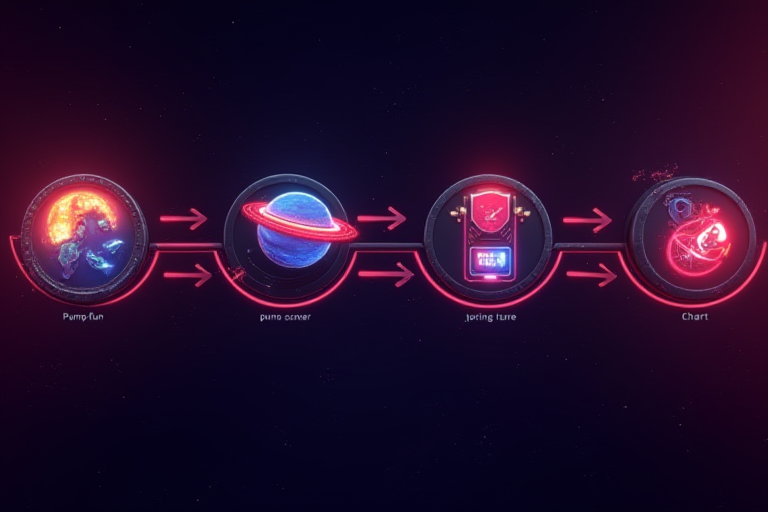
Step one: Phantom or Backpack
The gateway is a wallet. Two mainstream choices:
- Phantom: friendly UI, multi-chain support, browser-extension version sometimes a beat slow on hot trades.
- Backpack: Solana-native, rich xNFT features, deeper market-making integration, better for high-frequency small trades.
Beginners should start with Phantom — stable. After 20 trades a day, switch to Backpack. Both are non-custodial, security is on you — see the wallet guide for storing seeds.
For funding, withdraw SOL directly to a Solana address — pick Solana, not Ethereum. First-time funding of 0.5-1 SOL (about $100-200) is enough; bigger amounts hurt when they go to zero.
Step two: Pump.fun, the main battleground
Almost every Solana memecoin story you’ve heard comes from Pump.fun. The mechanic is brutally simple:
- Anyone can deploy a new token for 0.02 SOL, auto-injected into a bonding curve.
- Price rises along the curve — early buyers cheap, later buyers expensive, by design.
- At $69k market cap the token “graduates” — liquidity migrates to a Raydium pool for standard DEX trading.
- Creator takes 0.5% of trade fees; the rest goes into the pool.
Why does this produce 100x runners? Because it removes the “listing” step — previously you needed tens of thousands in liquidity to list on a DEX; now 0.02 SOL deploys a market. The floor falls to zero, supply explodes, and the few captured by a narrative moonshot.
But that floor also means 99% of these tokens go to zero. Pump.fun deploys 5000-15000 new tokens daily, under 1% graduate to Raydium, and maybe 0.1% then run 10x more. If you can’t accept that distribution, don’t enter. The supply-demand structure aligns with why memecoins explode.
The practical move on Pump.fun: enter the New tab, scan freshly deployed tokens, look at holder count, contract, and narrative. The judgment layer is below.

Step three: Jupiter Aggregator
Post-graduation tokens trade on Raydium, and you trade via an aggregator. Jupiter is the Solana standard. It splits your order across Raydium, Orca, Meteora to find best execution, so you don’t need to know which pool has the deepest book.
Key Jupiter settings:
- Slippage: default 0.5%. For hot memecoins this fails almost every time. Post-graduation hot coins want 5-10%; the truly viral ones 15%.
- Priority fee: on a congested Solana, paying priority lets your tx in first. For sniping set 0.001-0.005 SOL; better to overpay than to fail.
- MEV protection: Jupiter has built-in MEV protection via Jito Bundles — turn it on for hot trades.
Jupiter beats Uniswap-style AMMs for memecoin trading mainly because it supports limit orders and DCA, which matter critically for exits. If AMM mechanics are rusty, the Uniswap intro is a quick refresher.
Step four: DEX Screener and GMGN, the eyes
Two tools dominate Solana memecoin workflow:
DEX Screener: real-time price, volume, liquidity, holder distribution, pool age across every DEX. The single most important number for beginners is the top-10 holder concentration — above 40% is a red flag, meaning the team or whales can dump anytime.
GMGN: think DEX Screener plus on-chain sentiment plus one-click trading. It flags what “smart-money wallets” are buying, how many new wallets entered in N minutes, KOL mention rates. The killer feature: its one-click trading interface is 2-3 seconds faster than manual Jupiter, and in memecoin land 3 seconds is a 10% price move.
Two things beginners ignore: basic audits and social engineering. The audit pieces GMGN runs automatically: is Mint Authority renounced, Freeze Authority disabled, LP locked. If any of the three fails, it’s high-risk. The same checklist appears in Rug Pull identification, and for vivid death-spiral cases see memecoin death-spiral cases.
Social engineering is harder — a sudden KOL shout, Twitter screenshots of profits, a Telegram group on fire. 80% of the time this is coordinated price ramping, and you’re the exit liquidity. GMGN’s smart-money filter helps, doesn’t eliminate.
Slippage and speed: the actual edge
Sniping memecoins is decided more on execution than coin selection. Two details split winners from losers:
Slippage as art. My playbook:
- Un-graduated Pump.fun token: 2-5%.
- Just-graduated, first 30 minutes on Raydium: 5-15%.
- Viral, social media on fire (consecutive hourly green candles): 15-30%.
Too low and you watch “Failed Transaction” eat your SOL in fees. Too high and MEV sandwich bots take 10-20%. The balance is experience, not formula.
Speed tiers. From manual to bot:

- Phantom + DEX Screener: slowest, fine if you don’t snipe new coins.
- GMGN one-click: medium, suits most retail.
- Telegram bots (BONKbot, Maestro): fast, for newly-graduated coin chases.
- Custom Jupiter API scripts: fastest, if you code.
Higher tiers have higher returns but learning cost and capital risk rise even faster. Beginners stay at tier 2 for the first three months. No bots yet.
Exit cadence
A common memecoin story: 5x, don’t sell, wait for 10x. 10x, don’t sell, wait for 100x. 100x, then -70% in a day, and you’re staring at the chart.
Exit plans are made before entry. A baseline:
- At 2x sell 50% — back to cost plus core.
- At 5x sell another 25% — lock the main profit.
- Hold the last 25% for the moonshot tail.
Both Jupiter and GMGN support limit orders, so you can set 2x and 5x exits at entry. The discipline matters 10x more than “I feel it can keep going.”
Mind sybil accounts. Teams often create hundreds of wallets to fake “many people are buying.” GMGN’s “independent wallets vs related wallets” is the sybil signal — and the framework comes straight from sybil attacks and airdrops.
Set a mental floor
Solana memecoins won’t disappear soon, but the marginal edge erodes year by year — the $5k-to-$500k stories still happen, and new entrants keep showing up. So competition rises, average excess return falls.
My discipline: a fixed monthly budget (1-3% of total assets) into Solana memes, blown is blown, monthly reset. That “casino budget” framing beats “memecoins will set me free” every time. The longer history in Solana memecoin explosion explains why this restraint is the actual survival strategy.
Snipe fast, exit fast.