Can an AI Agent Actually Trade Onchain on My Behalf? Status and Boundaries
AI agents trading for you is real in 2026 — several projects have pushed “natural-language intent + onchain execution” to working-prototype quality. But “it runs” and “it decides for me” are different things. This piece maps the real boundary for AI agents trading onchain — what produces value today, what still needs supervision, and what shouldn’t be unleashed. For the concept layer, swing back to AI agents and AI guide.

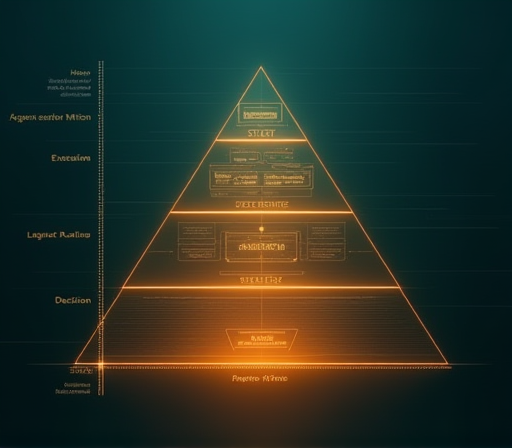
Split “agent trades onchain” into three layers
Most arguments mix things up because they don’t separate execution levels. Split the topic into three independent layers and almost every disagreement clarifies:
| Layer | What it does | 2026 maturity | Main risk |
|---|---|---|---|
| Execution | Turns an intent into onchain transactions per fixed rules | High | Contract, MEV, gas |
| Strategy | Picks the current optimum within your strategy space | Medium | Model bias, training distribution drift |
| Decision | Decides itself what and when to trade | Low | Alignment, opacity |
Most usable agent projects in 2026 are genuinely solid at the execution layer — natural language to swap, cross-chain bridging, conditional triggers. The strategy layer is hyped but unstable in practice. The decision layer is still mostly research — very few setups can run with real money.
Beginners buying agent-themed tokens often misread this: they think they’re paying for “the future of the decision layer”, but what actually ships is the execution layer — and those two carry totally different valuation logics.
Execution layer: what an agent can actually do for you
The execution layer is bounded, verifiable, rollback-friendly. In 2026 here are the agents producing real value:
- Natural-language to transaction: “Swap 50 USDC for ETH, max slippage 0.5%, route via Uniswap” — agent parses intent, picks route, signs, broadcasts.
- Multi-step orchestration: “Convert all dust in my wallet to USDT and bridge to Arbitrum” — agent stitches sub-tasks and handles partial-failure rollback.
- Continuous monitoring triggers: agent watches an address, a price threshold, or an event, then fires a pre-defined action.
- Onchain query proxy: translates “show me this wallet’s PnL last month” into a composite query across explorers and DEX data sources.
What these share: the human is responsible for “what should we do” and the agent owns “how to do it efficiently”. The bottleneck at this layer is no longer model capability — it’s the safe signing model. The mainstream pattern is session keys + per-tx limits + scoped allowances + explicit confirmation.
Strategy layer: usable, but stay close
The strategy layer is the agent picking the current optimum inside a strategy space you defined. For example:
- “Spend this budget on ETH in slices over 3 days to lower average cost.”
- “Pick the highest current APY stablecoin pool in DeFi where TVL > X.”
- “Run an arbitrage: if asset price gap between pool A and pool B exceeds 0.3%, execute.”
Real-world performance reduces to “works but unstable”. In-sample looks great; once market structure shifts (funding rate regime change, liquidity withdrawal, new protocol introducing perturbations) performance degrades sharply. The agent won’t notice “this is out-of-distribution” — it keeps executing the old pattern until losses accumulate enough for a human to catch on.
The correct 2026 usage of strategy-layer agents:
- Small size only — the per-agent AUM should be money you’d be okay losing entirely.
- Hard circuit breakers — e.g., 24-hour loss > 5% or per-trade loss > 2% triggers hard stop.
- Weekly human review — “agent runs + human recalibrates weekly” beats “fully autonomous”.
- Don’t mix strategies — putting an arb agent and a trend agent in the same account guarantees mutual interference.
Decision layer: don’t hand it to an agent in 2026
“Let the agent decide what to buy and when to sell” — as of 2026 this should not be trusted with real money. Not because models aren’t smart enough, but because of three structural problems:
- Opacity: “buy X” can be a probabilistic blend across 5 reasoning steps that can’t be cleanly reconstructed — no real post-mortem.
- Value drift: the “risk preference” planted at training can bend quietly in live operation. Today feels stable, three weeks later it defaults more aggressive.
- Adversarial manipulation: onchain is open data, and bad actors deliberately construct out-of-distribution perturbations to push agents toward wrong conclusions.
These don’t disappear “after a few more training rounds” — they’re the structural cost of full delegation to an opaque system. The sensible 2026 boundary: agent provides suggestion, explanation, and risk score; human pulls the trigger.
Boundary questions to settle before plugging an agent into funds
If you actually want an agent touching real money, every line below needs a concrete answer first:
- Signing model: hot wallet or session key? Never give the agent the master key. Session keys can carry expiry, transfer caps, contract whitelists.
- Fund isolation: spin up a dedicated account for the agent, don’t share with your main book. This is the agent-era equivalent of isolated vs cross margin.
- Behavior audit: every transaction the agent makes must be traceable after the fact — rationale, parameters, on-chain hash. An agent without logs is flying blind.
- Fail-safe: when the agent’s server is down, the model API errors, or the network is partitioned, its default behavior toward your funds should be “do nothing” — not “auto-flatten”.
- MEV and sandwich: routes used by the agent must have MEV-aware execution — batch settlement or private mempool. Broadcasting agent transactions directly to public mempool gets sandwiched fast.
- Gas ceiling: hard cap the gas budget so an extreme-congestion event can’t drain you in a single transaction. The basic rules of gas spending live in Ethereum gas optimization.
If you’re interested in directions like Bittensor TAO that tie agents directly to a crypto incentive layer, treat it as an “infrastructure bet” — different category from “I run an agent that trades for me”, with a totally different valuation thesis.
Three typical 2026 misreads about agent trading
The classic beginner misreads when evaluating “AI agent trading for me”:
- Mistaking demo for reality: demo videos run in handcrafted environments; the real chain is full of adversarial behavior, slippage, protocol upgrades. Demo-able is not survive-in-distribution.
- Mistaking automation for decision capability: automation is execution-layer skill; decisions are a higher layer. The first is mature, the second isn’t.
- Mistaking token price ups for product success: 2024 – 2026 agent token rallies were narrative- and speculation-driven, weak correlation with product quality. Conflating these miscalibrates positions.

A minimum checklist before plugging an agent into your funds
A 5-line executable checklist — boot the agent only if every line has an answer:
- Does this agent operate at the execution, strategy, or decision layer?
- What signing key type does it use, and what are the scope, limit, and expiry?
- Where are the hard circuit breakers for per-trade and per-day max loss?
- What’s the agent’s default behavior on failure — “do nothing” or “auto-flatten”?
- Can I cleanly replay each trade’s inputs, decision path, and outputs after the fact?
If any line is “don’t know”, the issue isn’t with the agent — you aren’t ready to put funds with one yet.
In 2026 agents are evolving toward “infrastructure tooling”, but not yet a substitute for your thinking. Position them as “assistants on the keyboard”, not “money machines”. Once framed right, agents compound value rather than gamble it. Not investment advice; conclusions have expiration dates.