Axelar versus Chainlink CCIP: Which One Should You Actually Use in 2026?
By 2026 the cross-chain messaging fight has narrowed to four serious players: LayerZero, Wormhole, Axelar, and Chainlink CCIP. The first two already have their own dedicated posts. This one focuses on the second pair. They look more and more alike on the surface — both run general messaging, both ship LST-style asset bridges, both chase RWA — but their guts could not be more different. Two audiences will get value here: developers integrating cross-chain messaging, and protocol teams that hold cross-chain custody risk.
I am going to flag where this lands up front: they are not substitutes, they are different jobs.
The security model fork
The deepest difference is at the base layer.
Axelar is a standalone PoS chain built on the Cosmos SDK, with validators staking AXL. Each cross-chain message is signed by Axelar’s validator set through Tendermint consensus, and a Gateway contract on the destination chain verifies the proof. In other words, Axelar’s security equals the PoS security of its own chain, decoupled from Ethereum or Solana. AXL has a circulating market cap of roughly $680M in May 2026, and that is the economic moat around all of Axelar’s messaging.
Chainlink CCIP is not a chain. Its core has three components: Committing DON, Executing DON, and the Risk Management Network (RMN). The first two reuse Chainlink’s existing oracle nodes, while the RMN is a separate verification network running a different client implementation, dedicated to risk-based circuit breaking. CCIP looks closer to a “dual-client plus economic insurance” model than to a PoS chain.
Each model has trade-offs:
| Dimension | Axelar | Chainlink CCIP |
|---|---|---|
| Security base | AXL PoS chain | Multi-DON + RMN |
| Reuses existing nodes | No, dedicated validator set | Yes, shares Chainlink nodes |
| Economic security scale | ~$680M (AXL) | ~$15B (LINK stake + service revenue) |
| Extreme-attack response | Chain-level rollback | RMN pause + multisig human override |
| Transparency | Fully on-chain | DON state partially on-chain |
Chainlink’s economic security is roughly twenty times the size of Axelar’s, but because Axelar is its own chain it is inherently more transparent: every validator’s stake, slashing history, and signature is observable. CCIP’s DON state is partially public, and the RMN governance includes a human override. This is exactly why institutions prefer CCIP — the kill switch is a designed feature; while DeFi-native protocols prefer Axelar — they want permissionless, unpausable semantics.

What the fees actually look like
The pricing layer is finer-grained. I sent the same standard cross-chain message from Arbitrum to Polygon three times on each system:
- Axelar GMP: base fee + Axelar gas + destination execution, totaling roughly $0.18 to $0.42
- CCIP: LINK-denominated fixed fee + destination gas, totaling about $0.65 to $1.20
CCIP is nearly twice as expensive on small messages. But the CCIP price includes “Smart Execution” (failure retry plus auto-gas refill) and “Rate Limit” (volume guardrails). On Axelar, retries are the application’s job, and token transfer goes through ITS (Interchain Token Service), which needs ITS Hub deployment on both source and destination.
| Scenario | Recommended |
|---|---|
| Single asset bridge below $100 | Axelar (cheaper) |
| Institutional bridge above $50k | CCIP (rate limits and RMN add insurance) |
| RWA, stablecoin issuer | CCIP (compliance and limits) |
| High-frequency DeFi protocol | Axelar (permissionless, more programmable) |
This is the table I show clients during selection. The question is never which is better, only which matches your load.
Ecosystem and asset compatibility
Axelar plays the “general bridge as infrastructure” game. Its Interchain Token Service lets any ERC-20 publish to every Axelar-connected chain in one shot, no redeployment needed. By 2026 Axelar covers more than 80 chains, spanning EVM, Cosmos, Sui, Aptos, and Stellar.
Chainlink CCIP’s coverage expanded sharply in 2025 and now spans more than 50 chains, but it concentrates on the chains banks would actually use: Ethereum, Polygon, Avalanche C-Chain, Arbitrum, Base, Solana, plus a handful of permissioned chains used in Swift, ANZ, and DTCC pilots. If your project sells to banks, CCIP brings SLAs and insurance to the table.
Cosmos-side, Axelar is essentially the only choice outside native IBC, which matters for dYdX v4, Sei, and Berachain. If your chain is not mainstream EVM, Axelar is the default.
For the broader cross-chain context, the cross-chain bridge guide and what is Chainlink CCIP cover the underlying vocabulary.
Developer experience
I wrote a small cross-chain voting app against both SDKs:
- Axelar GMP: import
AxelarExecutable, follow the well-documented SDK, run the local simulator, end-to-end working in about 4 hours. - CCIP: import
CCIPReceiver, call through the Router contract; the docs are equally good, but you must register your project with Chainlink Labs and configure each lane (chain pair). End-to-end in about 8 hours.
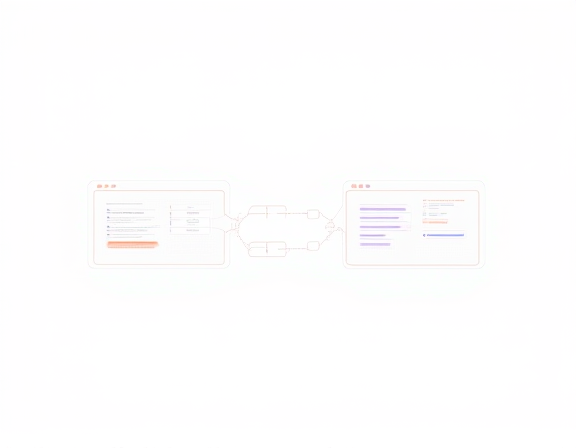
Axelar is friendlier to developers, CCIP is friendlier to institutions. Axelar’s lane opening is permissionless; if both chains are already on Axelar, you can send a message instantly. CCIP requires Chainlink Labs to open each new lane. Mainstream pairs are open, but new pairs require process.
The token roles are different
AXL is Axelar’s native token: stake, gas, and governance in one. Circulating supply is just over 600M with inflation around 1.8%. Staking AXL directly secures cross-chain messages.
LINK is not a CCIP-only token. LINK is the payment and stake token for every Chainlink service, of which CCIP is one. RMN nodes and DON nodes both stake LINK. Economically, LINK underpins the entire Chainlink service network, not just cross-chain.
So: AXL price tracks cross-chain message volume more directly, LINK price tracks the whole oracle + CCIP + RWA stack. If you want to bet on “cross-chain growth,” AXL has higher beta. If you want a diversified oracle + cross-chain + RWA exposure, LINK is steadier.
A real-world scenario: which one for an RWA project
I recently helped an RWA team pick a stack. They wanted to mirror US Treasury tokens from Ethereum to Avalanche C-Chain with these requirements:
- Individual mints could hit several million dollars
- Rate limiting and emergency freeze were mandatory
- A regulated issuer must be able to pause transfers
- Compatibility with their KYC subnet
We chose CCIP. Not because it is “more secure,” but because it can satisfy the “able to stop in extreme cases” requirement. Axelar in pure PoS form has no compliance-authorized pause (short of the entire validator set going offline). On the other hand, if I were building a DeFi protocol that needs cross-chain LP governance, I would pick Axelar — you do not want governance messages frozen by a regulator.
If your project balances safety and cost, the can I still trust cross-chain bridges in 2026 post has this year’s incident reviews.
Where they are heading
Axelar’s 2026 strategy centers on the Interchain Amplifier, letting third parties add chains without core-team approval. Chainlink CCIP is doing the opposite: tightening the qualification bar, prioritizing chains with financial customers.
The two paths fork into “DeFi default infra” and “institutional default infra” roles — a mature protocol team in 2026 may run both, routing different traffic types through different layers.
One rule: for open DeFi, Cosmos, and cheapest messages, pick Axelar; for compliant RWA, institutions, and emergency stops, pick CCIP.